Brief and Client
Analysis
The brief is not a questionnaire — it is a structured conversation. The goal is not to gather stylistic preferences (the client often cannot articulate them) but to understand the way that person lives, works, moves and connects with others. Style emerges from a way of living, not from a list of styles liked on Pinterest.
The fundamental questions are divided into four areas. They are not asked in sequence — they are allowed to emerge naturally in conversation.
Timetables, rhythms, who uses it, how many people, morning and evening habits.
Formal or informal dinners, parties, children, pets. Influences spatial arrangement.
Indirect question that reveals a great deal: materials, light, scents, sounds, temperature.
Dislikes are more revealing than tastes: they tell us with certainty what to avoid.
Reveals the identity the client wants to project. Fundamental for style choice.
Constraints define priorities. Better one perfect element than ten mediocre ones.

Prof. Vincenzo Pazzi
The Rules
of Mixing
No real project belongs to a single pure style. The client who wants "modern but with character" is unconsciously asking for a mix. Knowing how to mix styles with coherence is the distinguishing skill of the experienced designer. There are rules — not rigid, but solid.
One dominant style, one secondary
The mix works when there is a clear hierarchy. The dominant style occupies 70–80% of design choices (structure, materials, base palette). The secondary style enters in 20–30% (accessories, accents, details). More than two styles simultaneously rarely works.
Historical or philosophical connection
Successful mixes always have a logic that is not only visual but cultural. Japandi works because Japan and Scandinavia share the philosophy of the essential. Industrial + Art Déco works because both share material honesty and geometric precision. Baroque + Minimalism rarely works because they are philosophically opposed.
The "common thread" rule
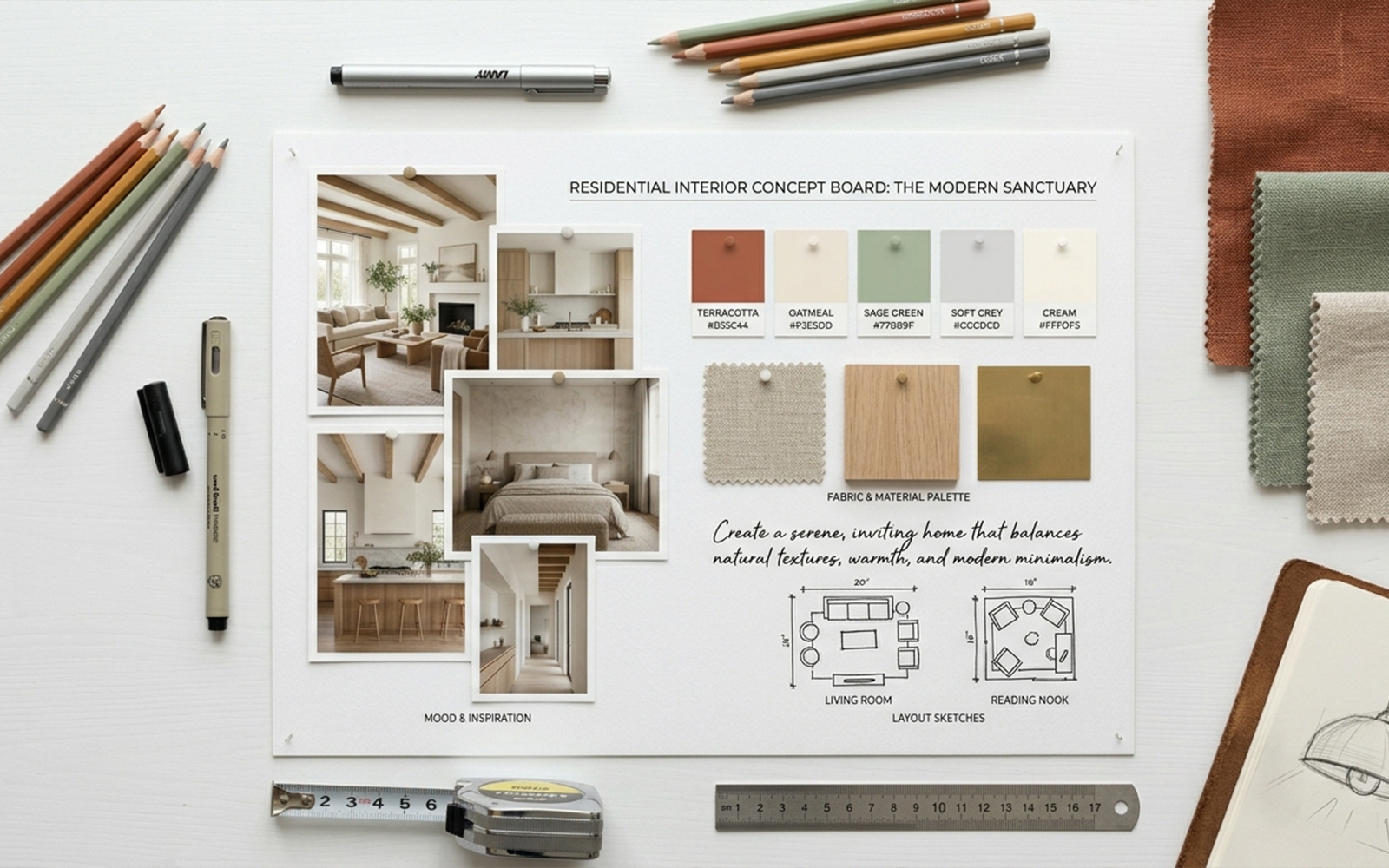
Every element from each style must share at least one common denominator: it may be colour, material, temperature or scale. The Eames sofa (MCM) works in an Industrial interior because they share metal and structural honesty. It would not work in a Baroque interior because there is no common thread.
One deliberate element of contrast
The most sophisticated mix includes one element that deliberately breaks coherence — and breaks it so well that it becomes the focal point of the project. A Baroque artwork in a Minimalist interior is not a mistake: it is a statement. But it must be the only one, and it must be the finest piece in the room.
Prof. Vincenzo Pazzi
The Concept
Document
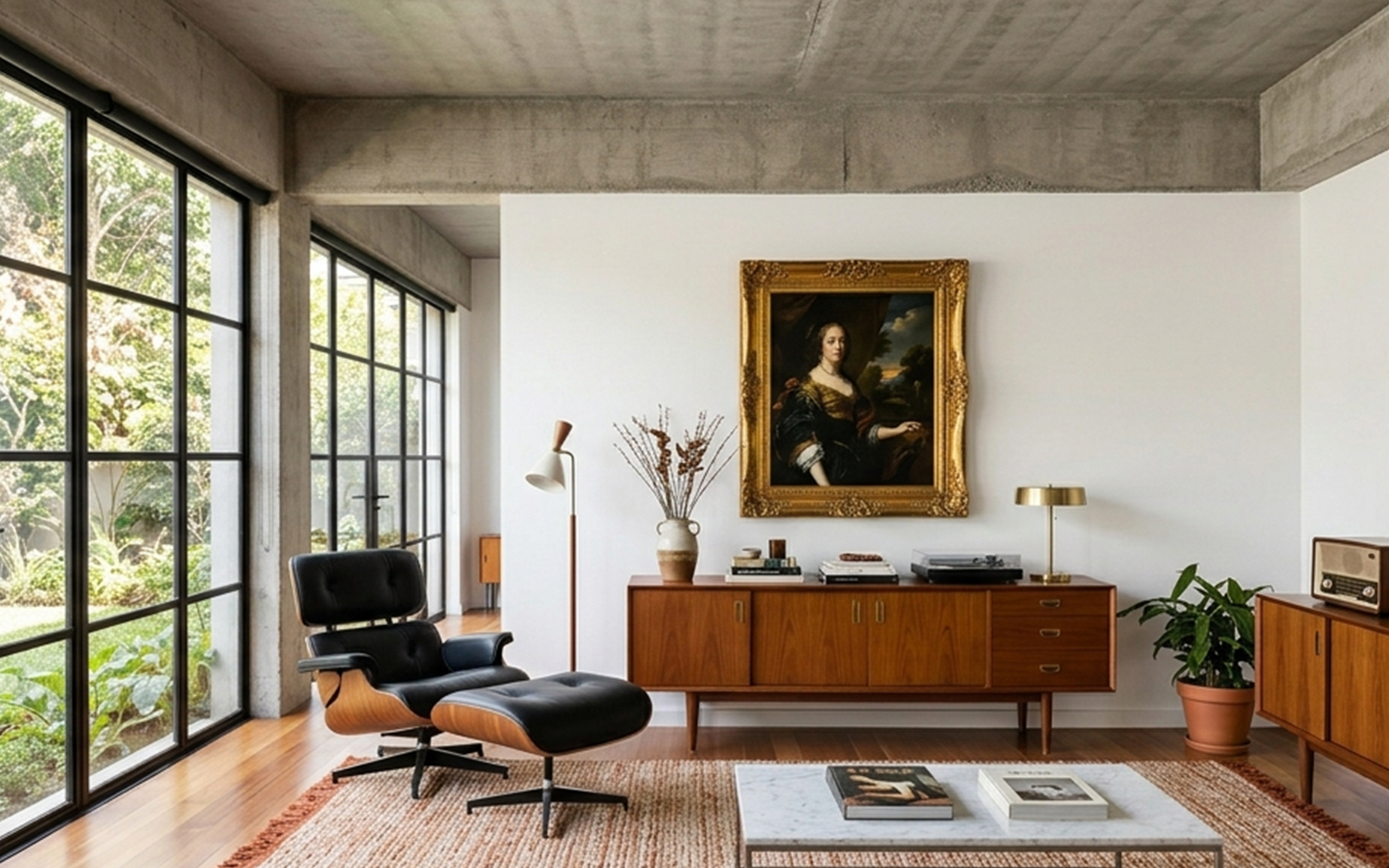
The concept document is the communicative contract between designer and client: it fixes the design intention before any furniture or colours are chosen. A well-written concept protects both parties — the designer from requests that contradict the established direction, the client from execution drift that loses the project's original identity.
A complete concept document consists of five elements, in this order:
The concept sentence
A single sentence capturing the essence of the project in evocative rather than descriptive terms. Not "Modern living room with gold accents" but "Urban retreat — the quiet of Japandi with the memory of Milanese Liberty".
Max 25 wordsThe MoodBoard
The visual board with atmospheric references, colour palette, material samples. Built following the 5 steps of Chapter 01.
A3 format or digitalDominant and secondary style
Explicitly states the two styles, their hierarchy and the common thread connecting them. Cites specific sources of inspiration (architects, designers, works).
½ page maxFunctional constraints and intentions
Summarises the key brief points: who uses the space, how and when. Links each stylistic choice to a real need identified in the brief.
ChecklistWhat this project is NOT
The most useful and most often forgotten section. Explicitly defining what is excluded protects the project's coherence throughout the execution phases.
3–5 itemsProf. Vincenzo Pazzi
From Brief
to Project
The professional design process is not linear: it has iterations, revisions, moments of uncertainty. But it also has an underlying structure that allows methodical progress. Knowing it does not eliminate creativity — it liberates it, because method manages uncertainty and allows the mind to focus on the real creative choices.
Brief and data gathering
Client meeting (see #brief section). Site visit and space measurement. Collection of photographs, floor plans, structural constraints. Documentation of existing conditions.
1–3 meetingsResearch and MoodBoard
Free collection of visual references. Selection and construction of the MoodBoard. Extraction of the colour palette. First hypothesis for dominant and secondary style.
Independent workConcept presentation
First presentation of the concept document to the client. Verification of alignment with the brief. Feedback gathering and any directional corrections. Formal approval.
Client presentationDesign development
Functional floor plans, furniture and finish selection, material specifications. Everything passes through the filter of the approved concept: every choice must be justifiable against the concept sentence.
Technical phaseFinal presentation and revision
Complete presentation with renderings or project boards. Client compares against the approved concept. Modification requests that contradict the approved concept are discussed — not automatically executed.
ApprovalArtistic direction on site
The designer verifies that execution choices respect the concept. The final choice — the positioning of an artwork, the lighting of a detail — can make the difference between a mediocre and an excellent project.
Execution phase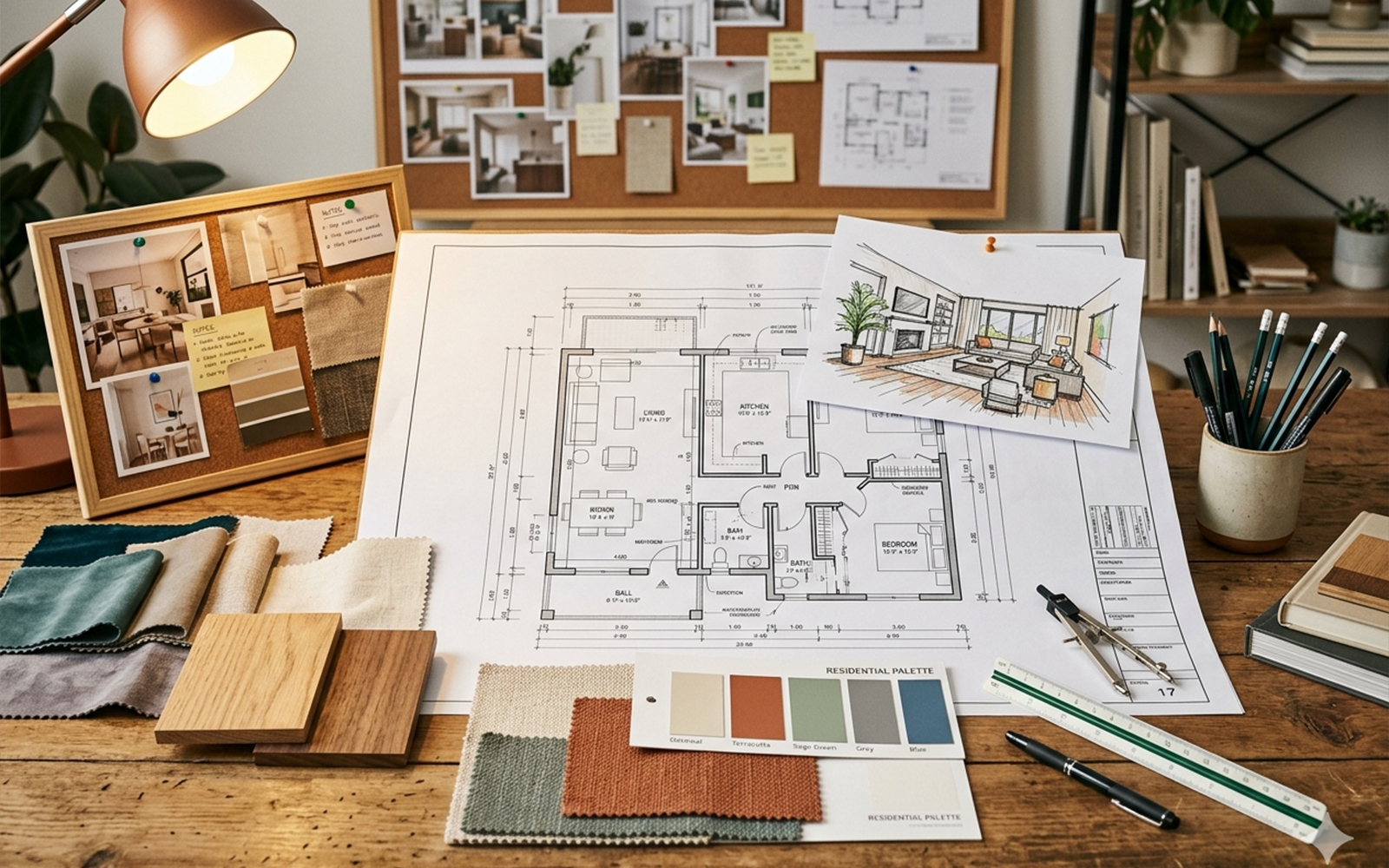
"A project does not end when it is delivered. It ends when the people who live in it stop noticing it — because it has become their home."
— Vincenzo PazziProf. Vincenzo Pazzi