Coastal &
Hamptons
Born on the Long Island shores frequented by New York's elite, the Hamptons style is Coastal design at its most refined: not beach-shack informality but a sophisticated interpretation of seaside living. Light, air, the colour of sand and ocean — without surrendering quality of materials or spatial rigour. It is one of the most requested styles in the premium residential market worldwide.
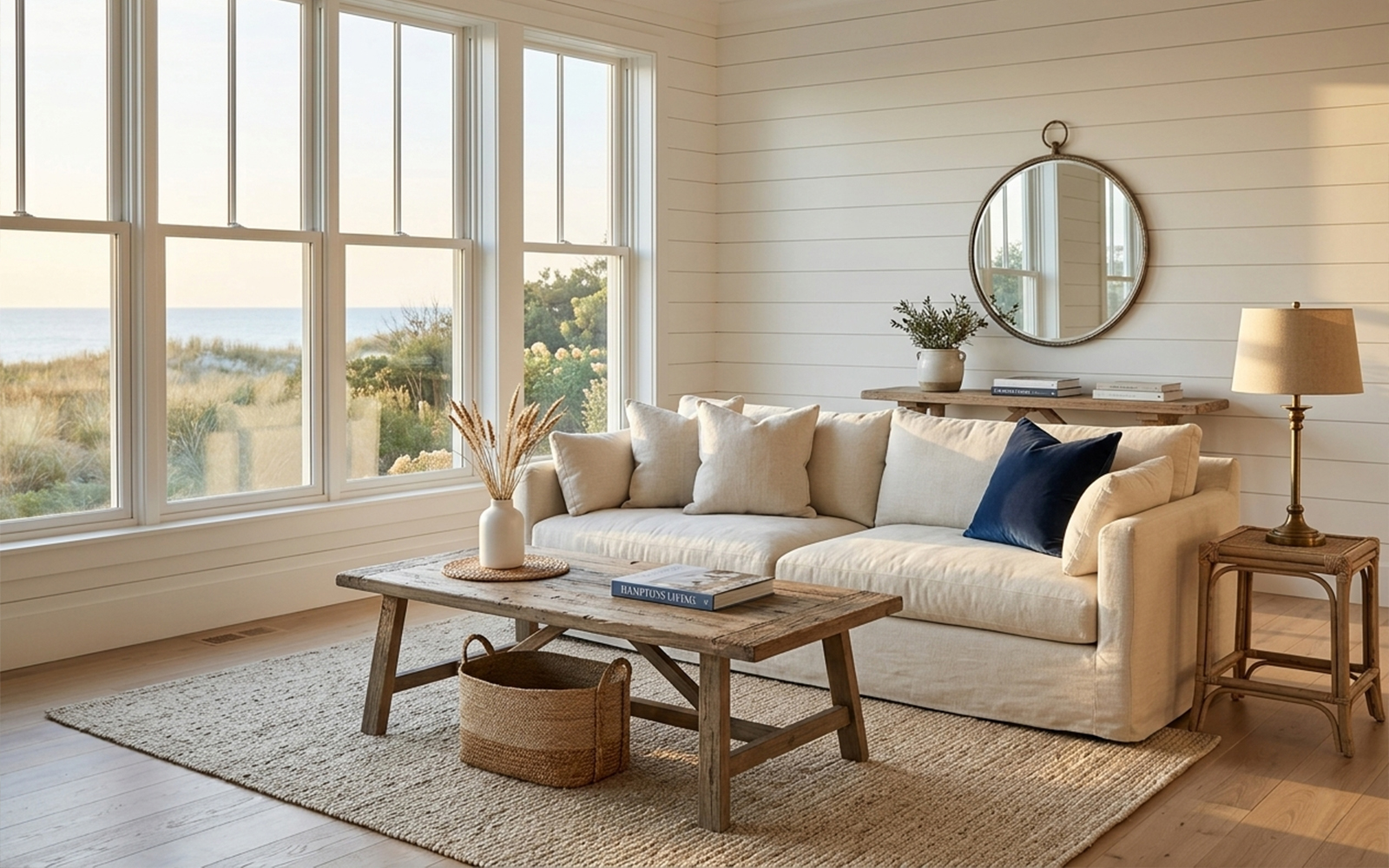
The Coastal palette begins with white — but never a stark, cold white. It is always warm: sand white, parchment, warm linen. The second layer is the texture of natural materials: bleached oak with visible grain, jute rugs, rough-weave linen cushions. The third layer is the single chromatic accent: navy blue, applied with restraint to a few key elements — a sofa, a cushion, a lamp base. The mistake most commonly seen in commercial interpretations is to load the space with maritime objects (anchors, ropes, shells) instead of letting the palette and materials carry the atmosphere on their own.
"The most sophisticated beach house looks like it has never heard of the sea."
— Bunny Williams, interior designerProf. Vincenzo Pazzi
Organic
Modern
Organic Modern is the style that emerged when the residential market grew tired of the cold rigidity of pure Minimalism but did not want to abandon its clean lines. The solution: keep the spatial simplicity, replace the hard materials with warm natural ones, soften the straight line into an organic curve. It is currently the most requested style in the 30–45 age bracket across Europe and North America.
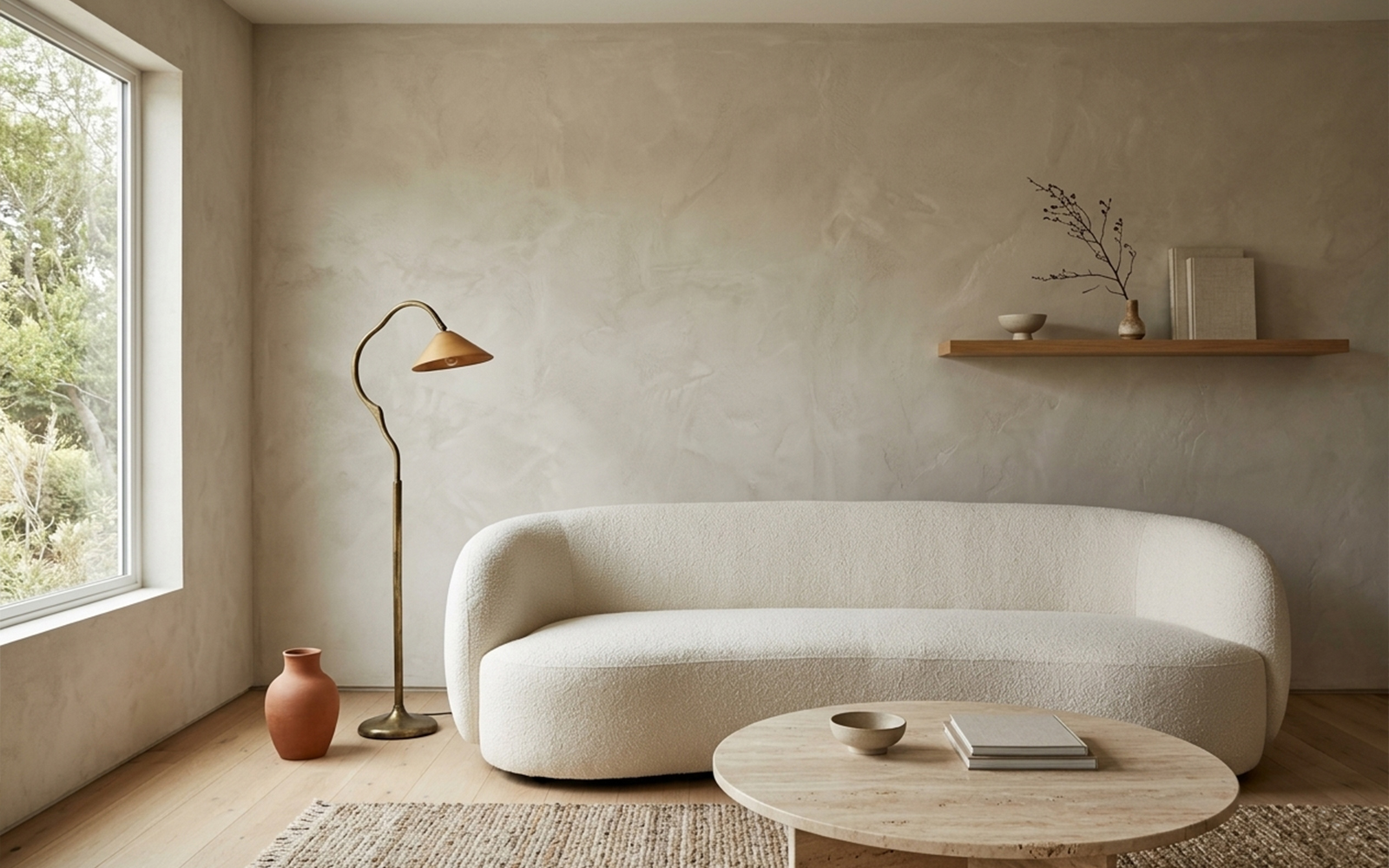
Travertine is the signature material of Organic Modern — its warm beige tones and natural voids make it simultaneously refined and imperfect. Bouclé fabric (looped wool textile) is the signature textile: tactile, warm, neutral. Raw plaster walls replace the painted plasterboard of Minimalism, adding depth without colour. The curve is structural, not decorative: arched doorways, rounded sofas, kidney-shaped coffee tables. Unlike Japandi — which shares the natural material palette — Organic Modern has no philosophical underpinning. It is an aesthetic response to a market demand, and it is more honest when treated as such.
"Warmth is not opposed to modernity. It is what makes modernity liveable."
— Kelly Wearstler, interior designerProf. Vincenzo Pazzi
Transitional
Transitional is statistically the most sold residential interior style in the world. Most clients who say they want "something modern but not cold, classic but not heavy" are unknowingly describing it. It occupies the precise midpoint between traditional and contemporary: it takes the proportions and warmth of classical design and strips away the ornament; it takes the clean lines of modern design and adds material richness. The result is a style that almost nobody dislikes — which is both its strength and its design challenge.
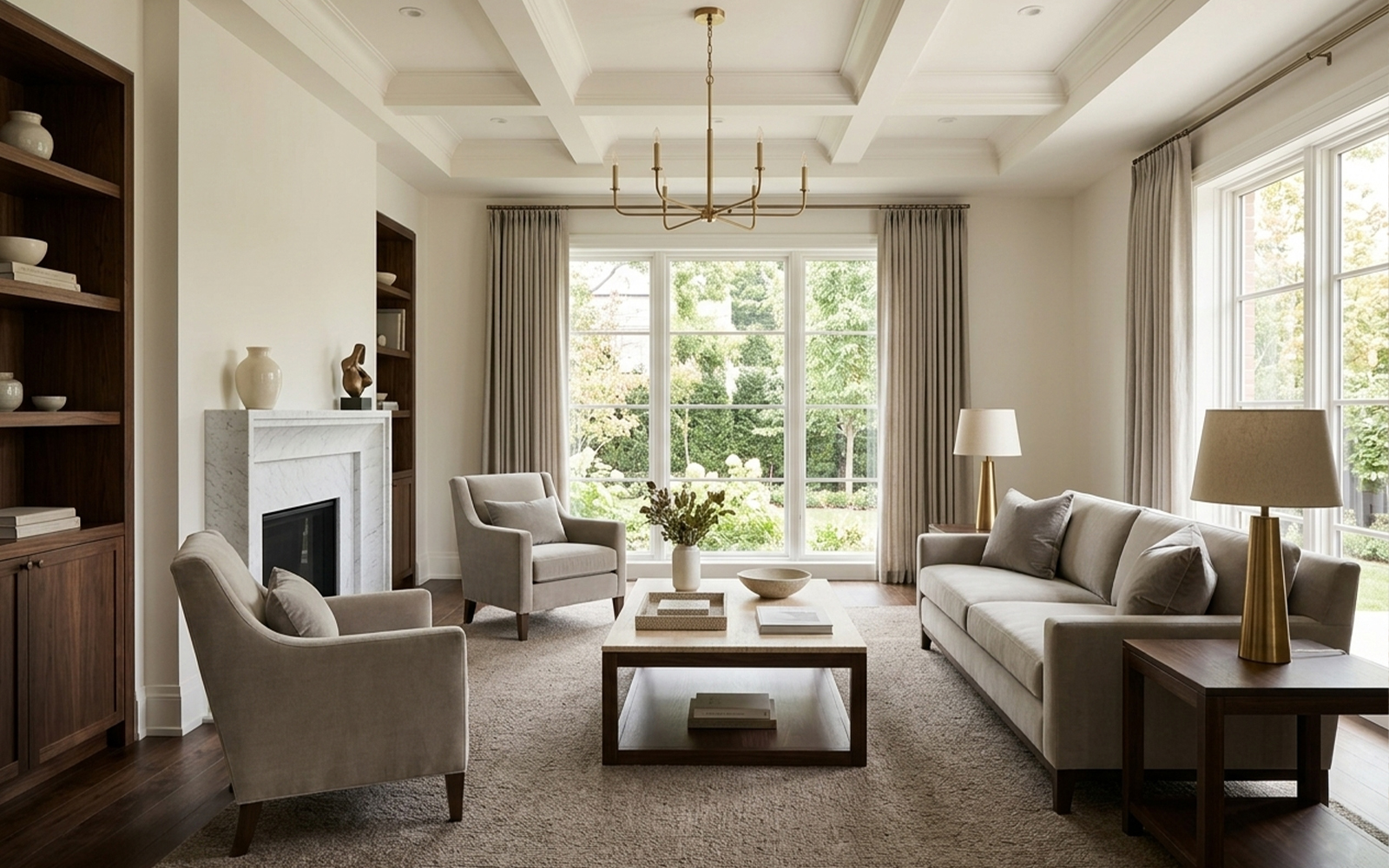
The design challenge of Transitional is precisely its universality: a style that nobody dislikes risks becoming a style that nobody notices. The best Transitional interiors succeed because they make precise, courageous material choices within a restrained framework — a statement marble slab, a walnut floor with a distinctive grain, a brushed brass fixture that draws the eye. The palette is always neutral at its base (warm whites, greiges, soft taupes) but it is never anonymous: it is the result of careful selection, not default indifference. Transitional is often described as a compromise — it is more accurately a synthesis.
"Good design is not about a style. It is about a point of view expressed with confidence."
— Thomas O'Brien, interior designerProf. Vincenzo Pazzi
Contemporary
Classic
Contemporary Classic is what happens when architectural quality meets restraint: the proportions, symmetry and material richness of classical design, reinterpreted without ornament and without nostalgia. It is the language of the finest new-build villas, five-star hotel suites and the apartments that appear in the premium pages of Architectural Digest. It is not a historical revival — it is a contemporary ambition.
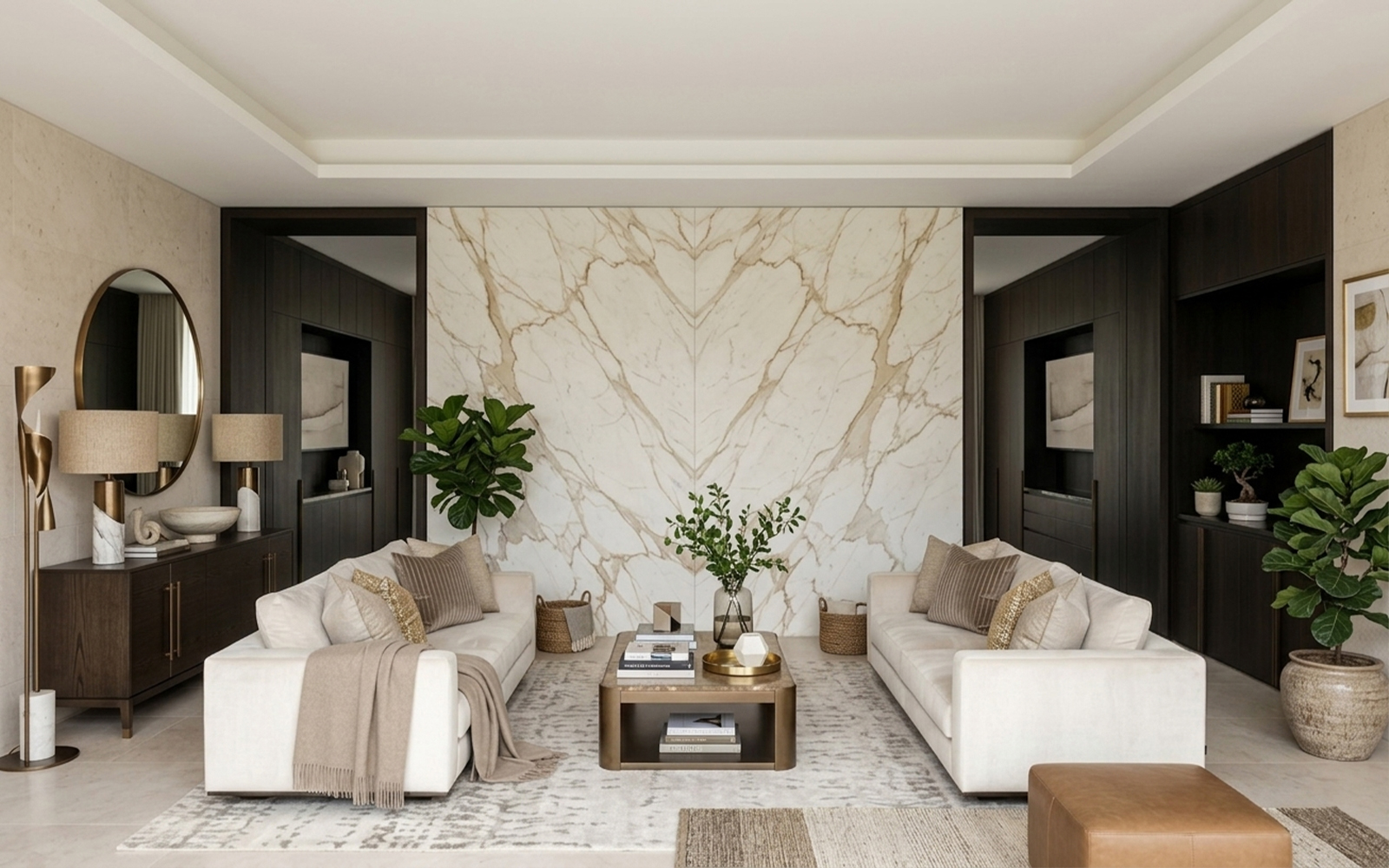
The defining characteristic of Contemporary Classic is the absolute quality of execution — every detail is considered, every junction is precise, every material is the best available in its category. Calacatta marble bookmatched on a feature wall. Dark oak veneer with a horizontal grain running the full length of a bespoke sideboard. A bronze door handle that weighs exactly as much as it should. This style does not tolerate shortcuts: it exists in the gap between what a client is willing to spend and what a designer is willing to compromise on. When the budget and the ambition align, it produces some of the most enduring interiors being built today.
"Luxury is in each detail."
— Hubert de GivenchyProf. Vincenzo Pazzi
Mediterranean
The Mediterranean is not a single country's style — it is a shared visual culture stretching from Greece to Morocco, from Puglia to Andalusia. What unifies it is the response to a common condition: intense light, warm climate, a building tradition that uses plaster, stone, terracotta and tile as primary materials. Today it is one of the most requested styles for holiday homes, rural conversions and any project where the clients want to feel the warmth of the south.
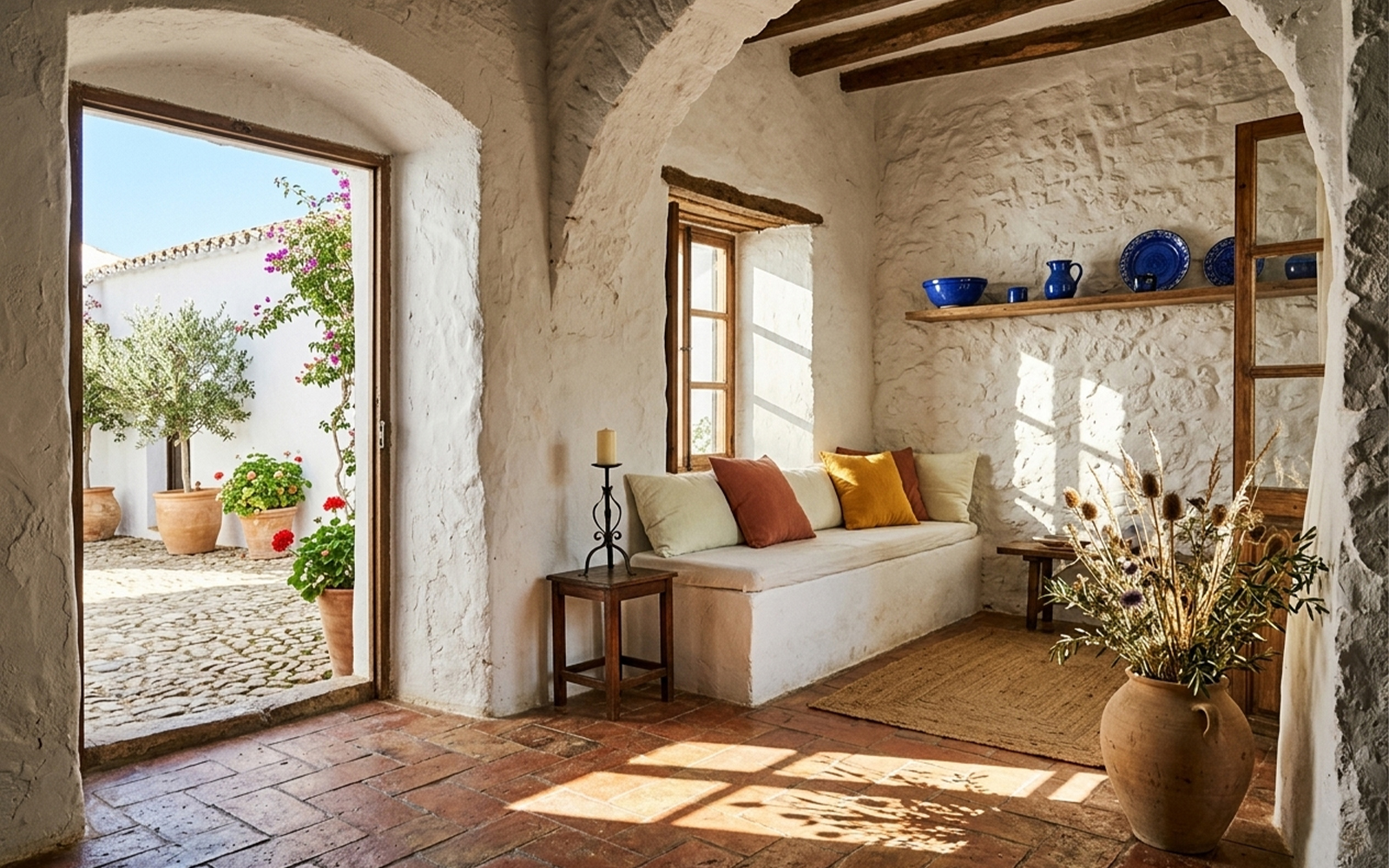
The Mediterranean interior works by subtraction and texture, not by accumulation. The wall is white or near-white plaster — but it is a rough, hand-applied plaster that catches the light differently at every hour of the day. The floor is terracotta — but handmade, imprecise, warm underfoot. The colour comes in concentrated doses: a cobalt blue tile border, a saffron cushion, a shelf of painted ceramics. Arched doorways are not decorative affectation — they are structural in the original building tradition, and their organic geometry softens the interior in a way that no rectangular opening can replicate. The contemporary interpretation of Mediterranean keeps this grammar but removes the folkloric excess: no donkeys painted on tiles, no anchors, no tourist-shop objects. The beauty comes from the materials and the light.
"The Mediterranean light is not a backdrop — it is the main character of every interior."
— Ilaria Miani, architect and designerProf. Vincenzo Pazzi