Classical &
Neoclassical
Classical interior design is rooted in the architecture of ancient Greece and Rome — orders, columns, entablatures, absolute symmetry — and was reinterpreted in the Neoclassicism of the 18th and 19th centuries as the language of reason and power. It is the founding vocabulary of the entire Western tradition.
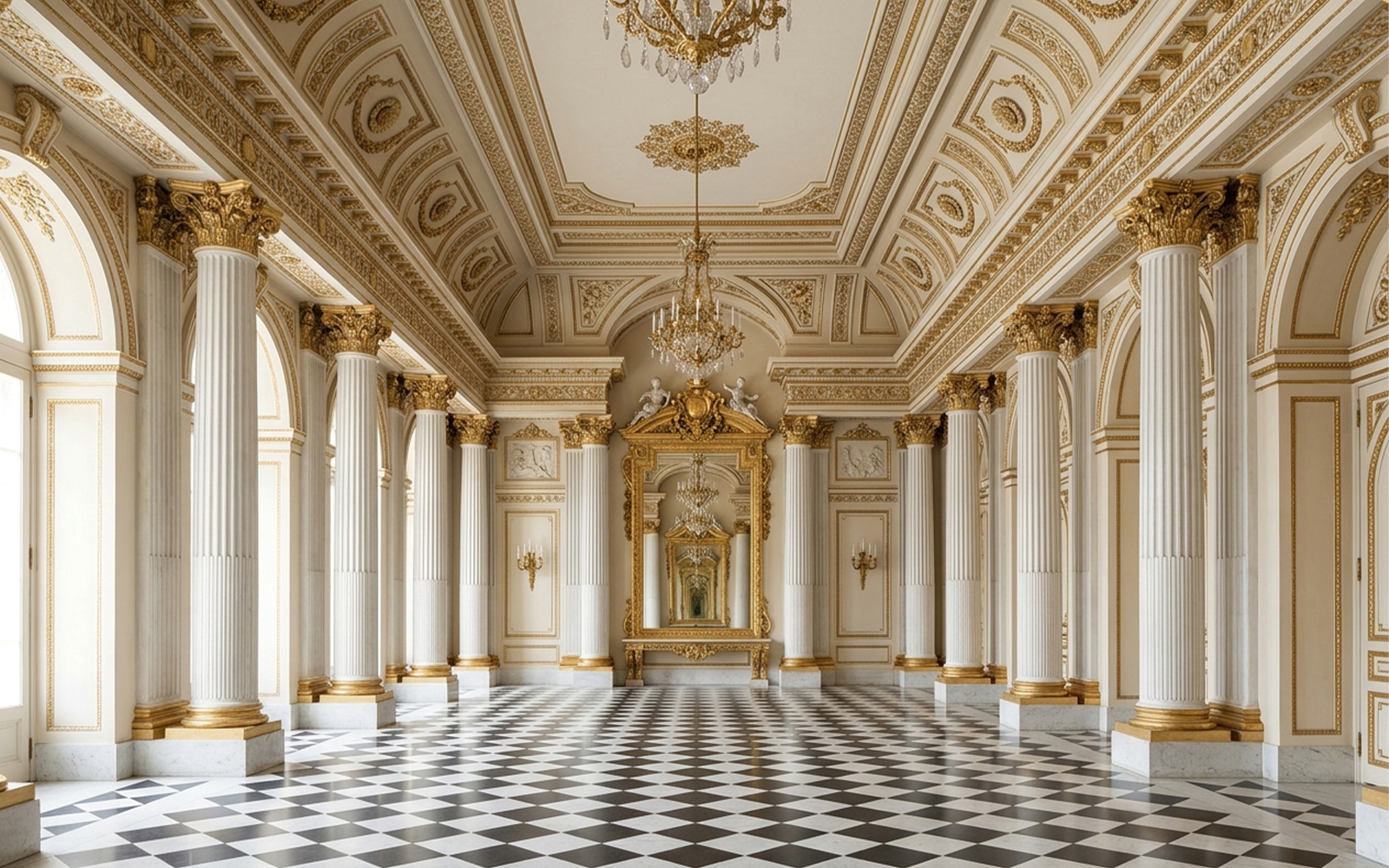
Symmetry is the absolute law: every element has its mirror image, every wall is balanced. Furniture follows the proportions of the architectural orders — Ionic, Doric, Corinthian — and decoration is controlled, never exuberant. Marble, lacquered wood, gilded mirrors and striped silk are the defining materials. The palette is restrained: marble white, gold, Pompeian red, cobalt blue on neutral grounds. The style communicates authority, culture and permanence. Today it is used in institutional spaces, historic villas and contemporary interpretations that adopt its proportions while eliminating the ornament.
"Order is the rule of beauty, but proportion is its soul."
— Leon Battista Alberti, De Re Aedificatoria (1452)Prof. Vincenzo Pazzi
Baroque &
Rococo
The Baroque is the response of the Church and European courts to the Protestant Reformation: magnificence, movement, dramatic light. The Rococo is its 18th-century evolution — lighter, more ornamental, more playful. Both establish the aesthetic of ostentatious wealth as a political statement.
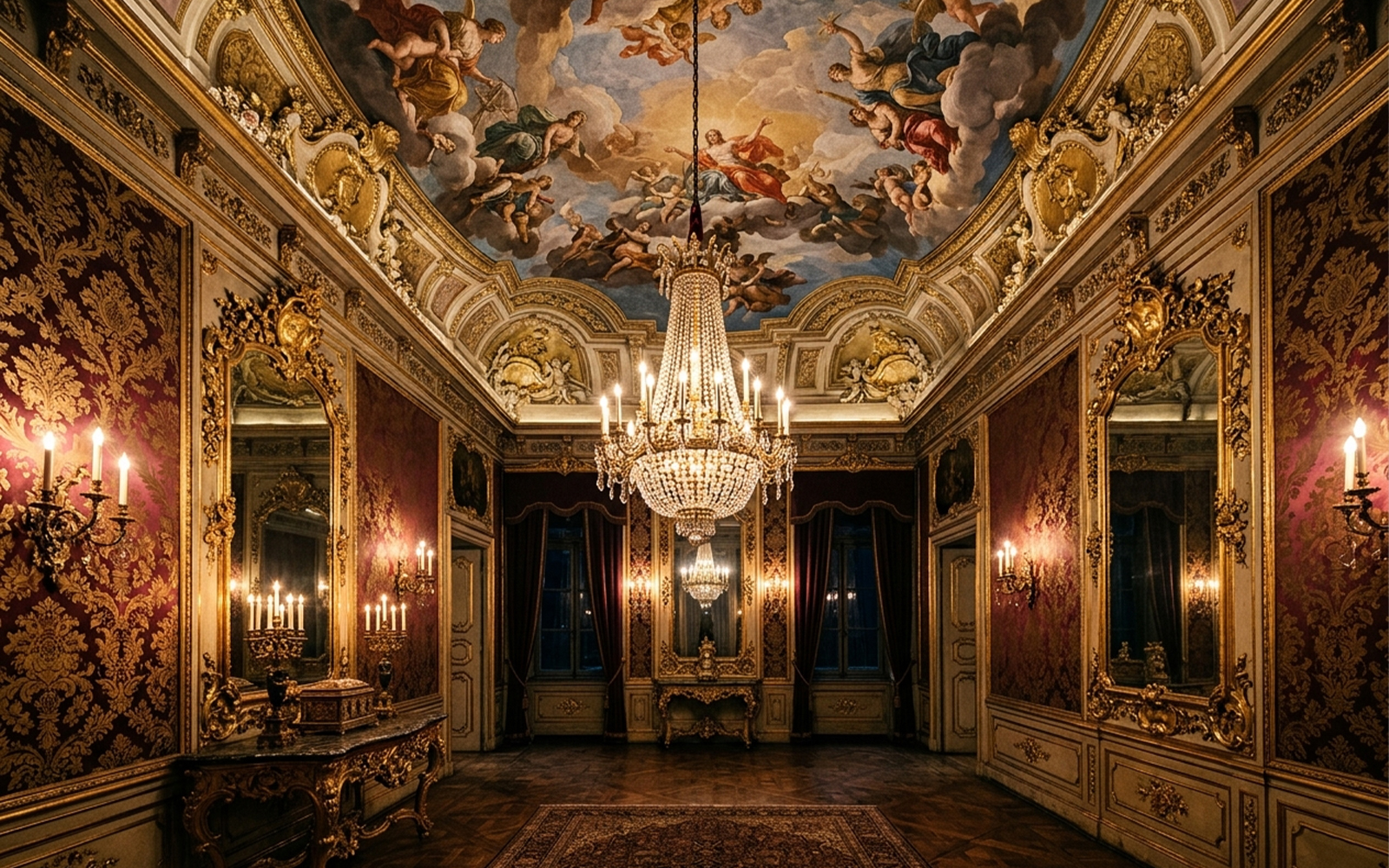
The curve replaces the straight line. Every surface is an opportunity for decoration: frescoed ceilings, mirrors that multiply light and space, carved and gilded woods, brocaded fabrics. The chiaroscuro contrast — inherited from Caravaggio's painting — appears in the alternation of deep shadows and surfaces that catch candlelight. The Rococo softens the drama with pastel tones and more capricious forms. Today their vocabulary — the curve, the reflection, the luxury of fabric — continuously feeds contemporary New Luxury.
"Magnificence is never too much when it serves to communicate glory."
— Gian Lorenzo Bernini (attr.)Modern Baroque is not a historical revival — it is a contemporary design approach that borrows the Baroque vocabulary (the curve, the mirror, the gilded surface, the dramatic contrast of light and dark) and applies it with restraint and awareness. Where the original Baroque was total and overwhelming, Modern Baroque is selective: a single statement mirror, a curved velvet sofa in deep bordeaux, a ceiling rose on an otherwise minimal surface. It overlaps significantly with the New Luxury and Contemporary Classic aesthetics and is widely requested in high-end residential and hospitality projects.
Prof. Vincenzo Pazzi
Empire
Style
Born under Napoleon Bonaparte between 1804 and 1815, the Empire Style is Neoclassicism radicalised by political power. Conquered Egypt brings sphinxes and caryatids; imperial Rome supplies eagles, laurels and fasces. It is a style of propaganda as much as of interior design.
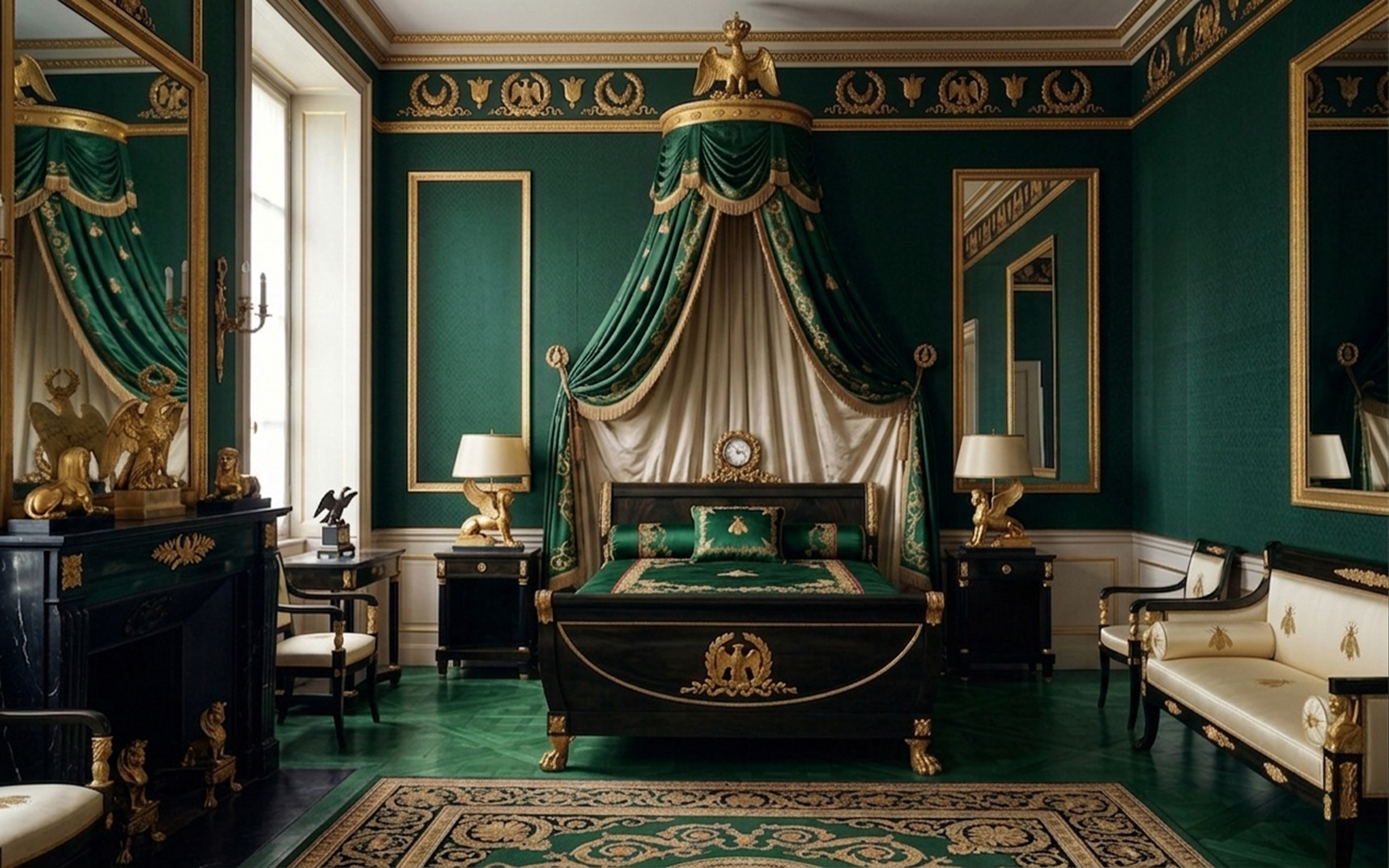
Dark mahogany is the dominant wood. Gilded bronzes — lion-paw feet, mask handles, studs — provide the noble accent. Fabrics are heavy and monumental: vertically striped silk in imperial colours (green, purple, scarlet), with draped canopies and door curtains. Symmetry is absolute and furniture takes on an almost sculptural quality. Despite its formal rigidity, the Empire Style had an extraordinarily long legacy: the entire second half of 19th-century Europe is indebted to it, and its vocabulary of bronze and mahogany resurfaces cyclically in contemporary luxury.
"Architecture is the incorruptible witness of history."
— Charles Percier, Napoleon's court architectProf. Vincenzo Pazzi
Provençal &
Country
Born in the countryside of southern France as the antithesis of court interior design: no gold, no silk, no imposed symmetry. The beauty of the Provençal style lies in the patina of time, in sought-after imperfection, in the simplicity of rural materials elevated to a deliberate aesthetic choice.
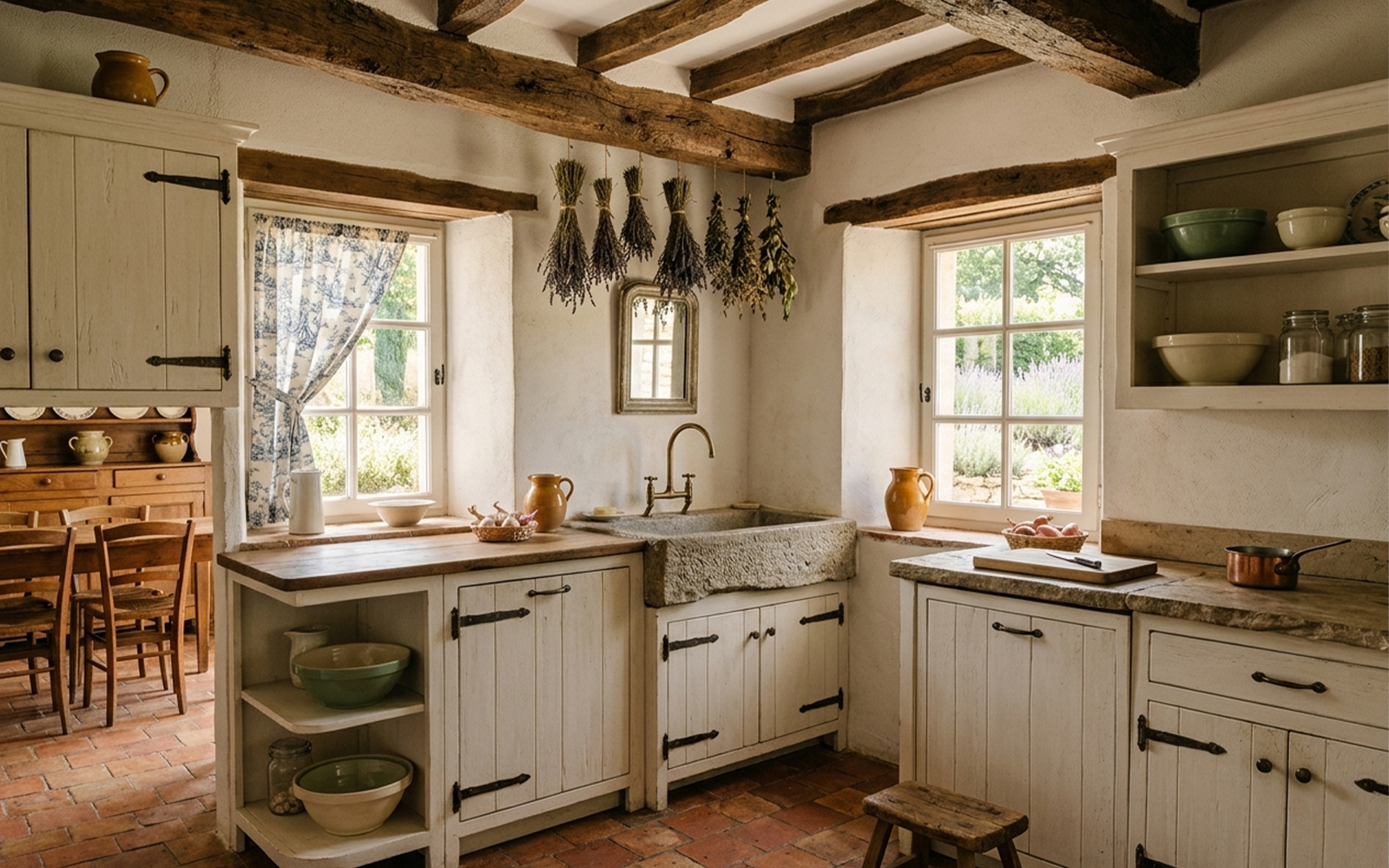
The wood should not be polished — it must show its grain, its dents, its fading colour. Exposed beams, irregular terracotta floors, furniture painted white or lavender blue are the fundamental ingredients. Fabrics are printed cotton with small floral motifs or Mediterranean stripes. Lavender leads the palette, accompanied by wheat yellow, lime white, sage green and terracotta. Often reduced to a "shabby chic" cliché, in its authentic version it maintains a coherence and warmth that are difficult to match.
"Simplicity is the ultimate sophistication — but only when it is chosen, not endured."
— Leonardo da Vinci (adapt.)Shabby Chic is the commercial derivative of Provençal, widespread in the 2000s and 2010s primarily through the influence of designer Rachel Ashwell. It shares the distressed surfaces, the pale palette and the vintage objects, but loses the authenticity of the original: furniture is artificially aged rather than genuinely worn, the imperfection is manufactured rather than accumulated over time. Still widely requested by clients — particularly in holiday homes and bed-and-breakfasts — and useful to know in order to understand what the client is asking for and, where appropriate, to redirect them towards a more considered and durable version of the same sensibility.
Prof. Vincenzo Pazzi
Colonial
The Colonial style was born from the encounter between European construction traditions and the materials and cultures of colonised territories. The result is a hybrid aesthetic that brings together Asian teak, African rattan, Goan tiles and plantation ceiling fans. Its appeal is inseparable from its complex history.
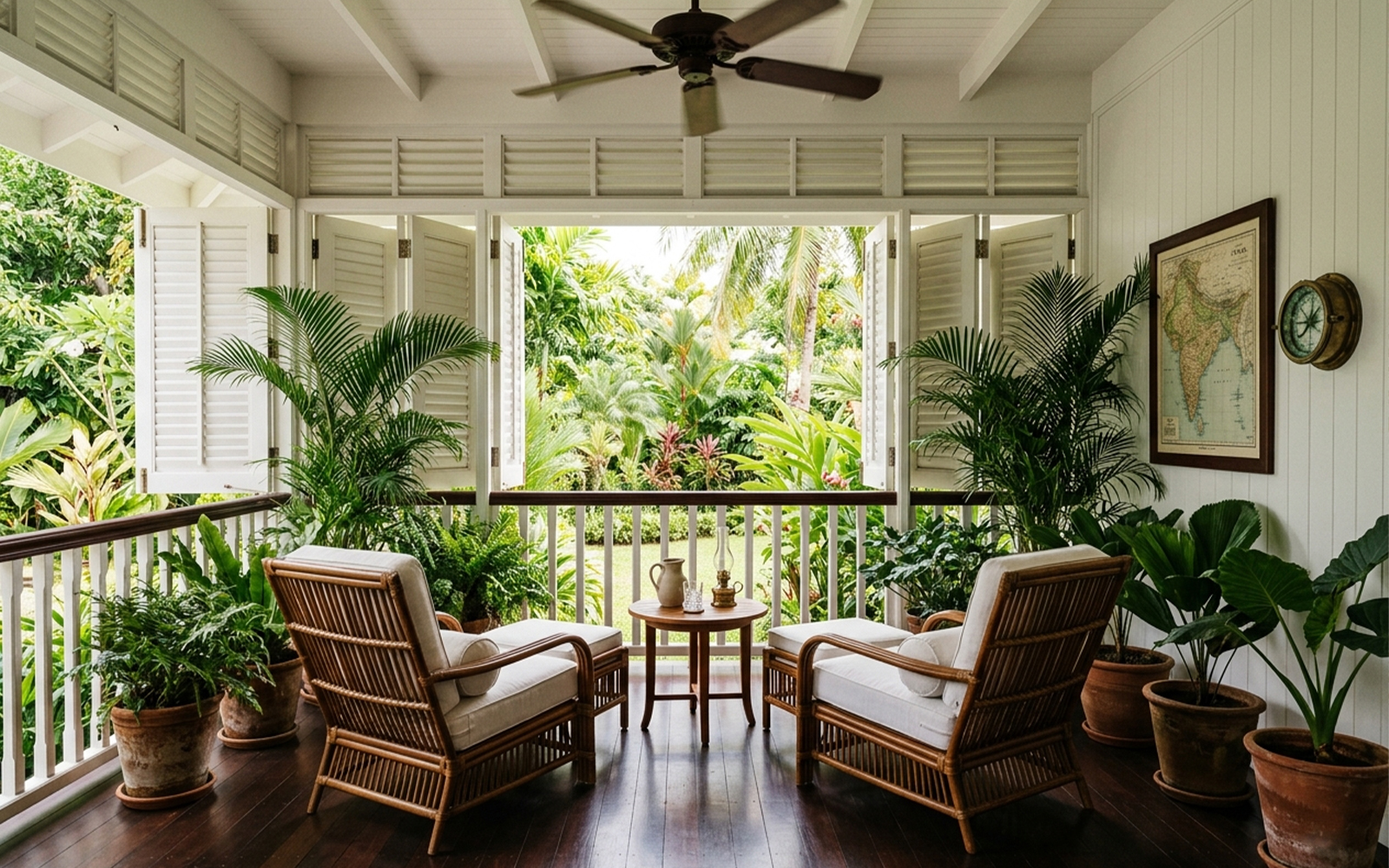
Solid teak is heavy, dark and durable under monsoon conditions. Rattan and bamboo for chairs and sofas provide visual lightness. Coloured hydraulic encaustic tiles decorate floors and skirting. Fabrics are starched white cotton — simple and functional. Spaces were designed for the climate: wide verandas, high ceilings, wooden shutters to filter the light. Today the style is reinterpreted in a contemporary key — "tropical colonial" — with attention to material sustainability and cultural contextualisation.
"Every style carries with it the history of those who built it. Knowing that history is the prerequisite for using it intelligently."
— Prof. Vincenzo PazziProf. Vincenzo Pazzi