Systems and
Safety
Design with technical care before aesthetics
The kitchen is the room with the highest concentration of systems in the entire home. All systems must be decided before positioning the furniture — doing it the other way round is a serious mistake. Systems cannot be moved once the kitchen is installed.
Prof. Vincenzo Pazzi
Plumbing
System
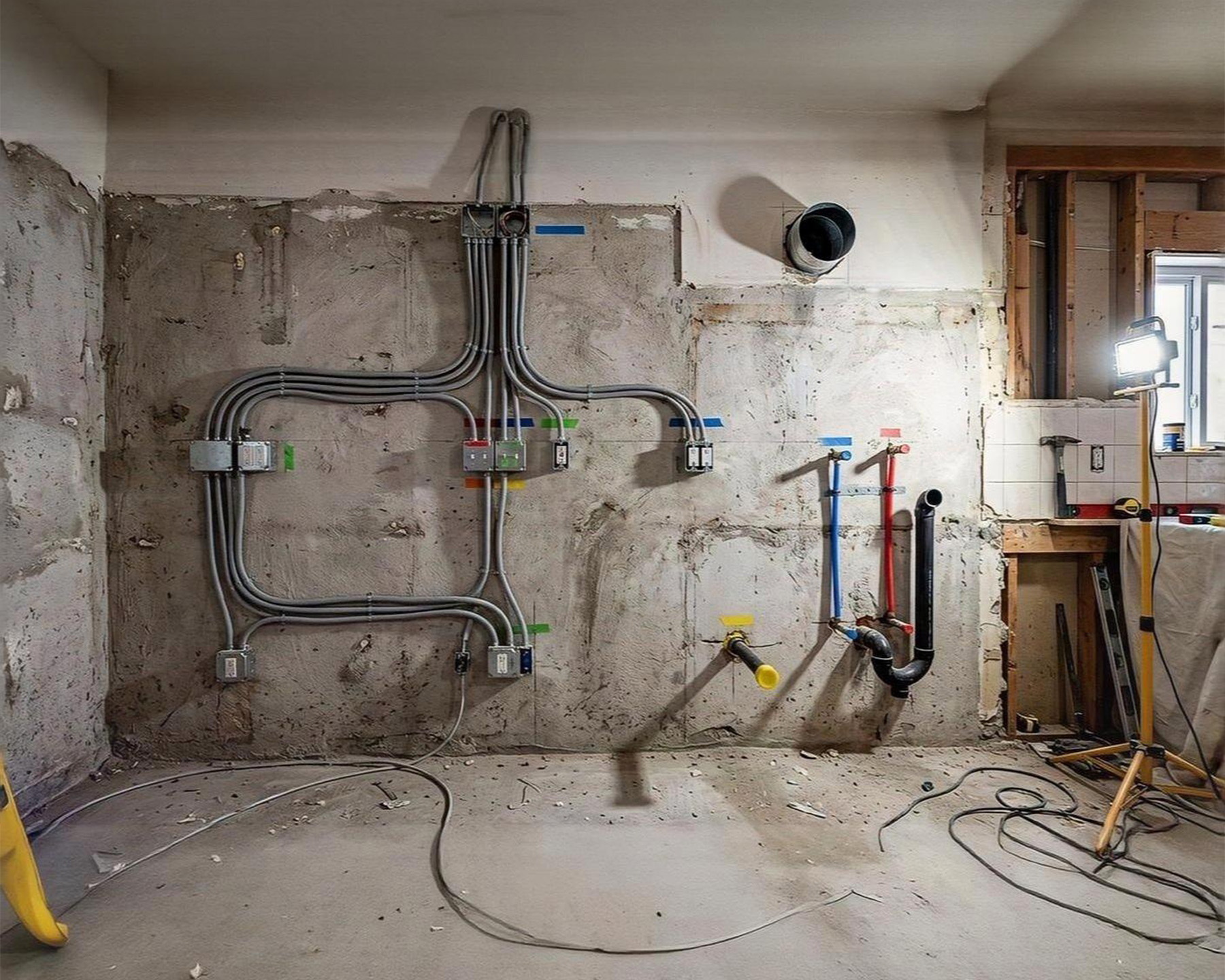
Water and drainage: the choice that cannot be changed
The position of floor drains is the hardest constraint to move. Before any kitchen project, it is essential to know precisely the position of existing drains: the placement of the sink — and therefore the entire kitchen — largely depends on this.
Cold and hot water supply
The kitchen tap must always have both cold and hot water supply. The maximum recommended distance from the boiler or central water heater is 8 m to avoid long waits for hot water.
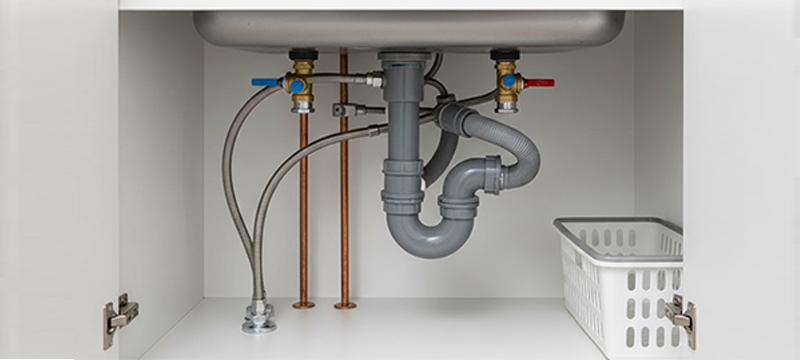
Drains and traps
The sink drain requires a minimum diameter of 40 mm. The trap must be accessible for cleaning. Dishwasher and washing machine (if in the kitchen) have separate drains that feed into the same stack.
Limescale filter
In areas with hard water (hardness > 25°F), the water softener or magnetic limescale filter is an essential investment. It protects the dishwasher, water heater and taps, extending their useful life by 3–5 years.
Water for American fridge and dispenser
If an American-style fridge with dispenser or an ice machine is planned, a cold water supply is needed in or near the cavity. Planning it before installation avoids invasive subsequent interventions.
Prof. Vincenzo Pazzi
Gas vs
Induction
The most debated choice in kitchen design
The gas-induction debate has no absolute answer: it depends on cooking habits, the type of home, the budget and sensitivity to energy consumption. The following table provides an objective technical comparison.
| Parameter | Gas | Induzione | Ceramic hob |
|---|---|---|---|
| Energy efficiency | ~40% | ~85% | ~65% |
| Heating speed | High | Very high | Low |
| Temperature precision | Good (visual) | Excellent | Sufficient |
| Cleaning | Difficult (burners) | Very easy | Easy |
| Safety | Gas caution | Maximum | Good |
| Pan compatibility | All | Ferromagnetic only | Almost all |
| Initial system cost | High (gas connection) | Low (electrical only) | Low |
| Running cost (annual) | Medium (gas cheaper) | Medium-high (electricity) | High |
| Wok/open flame cooking | Excellent | Not possible | Not possible |
| Island installation | Complex (pipework) | Simple | Simple |
Market trend 2024
Induction is progressively replacing gas in new builds thanks to superior safety (no flame, no leaks), ease of cleaning and energy efficiency. In Italy the share of induction hobs has risen from 18% (2015) to 42% (2023). Gas remains preferred by professional chefs and passionate cooks for high-temperature cooking.
Prof. Vincenzo Pazzi
The Range
Hood
Not optional: it is a technical and health requirement
The range hood is legally required in every kitchen with gas. But even in induction kitchens it is essential to remove vapours, grease and odours that settle on surfaces and curtains. The air flow rate is the most important technical parameter: it must be at least 10–12 times the kitchen volume per hour.
Minimum flow rate
300
m³/h small kitchen
Recommended flow rate
600
m³/h medium kitchen
Minimum height from hob
65
cm (gas) / 55 cm (induction)
Minimum width
=
equal to the hob width
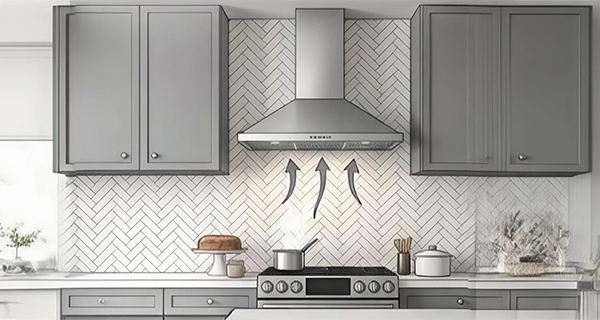
The classic solution, mounted against the wall. Available in recirculating (carbon filter) or extracting (external ducting) version. Large extraction capacity, very visible design.
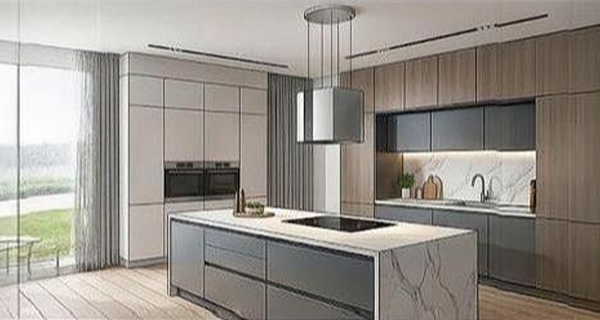
For hobs on islands or peninsulas. Suspended from the ceiling with upward ducting. An important design element: it often becomes the visual focal point of the kitchen.
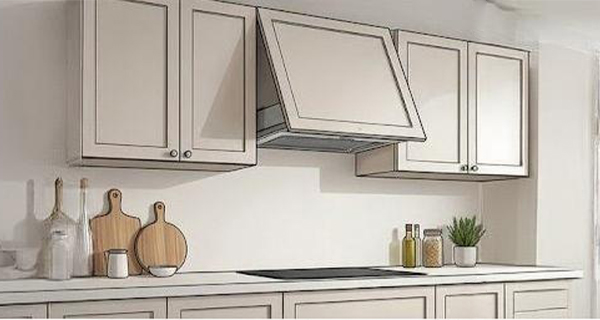
Hidden inside a wall unit, completely invisible. Elegant solution for those who do not want the hood to be a visual element. Generally lower extraction capacity.
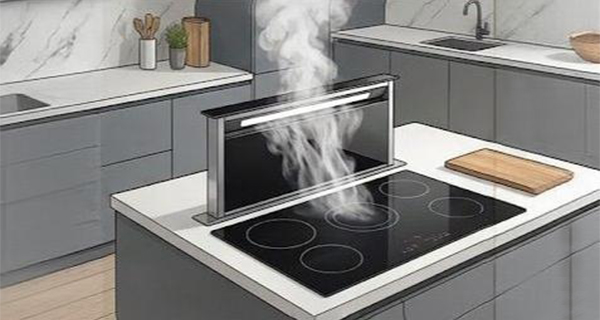
Downward extraction, integrated directly into the hob. Ideal for islands where a suspended hood cannot be installed. Limited effectiveness for high-temperature cooking.
Prof. Vincenzo Pazzi
Electrical
Outlets
Functional distribution of power
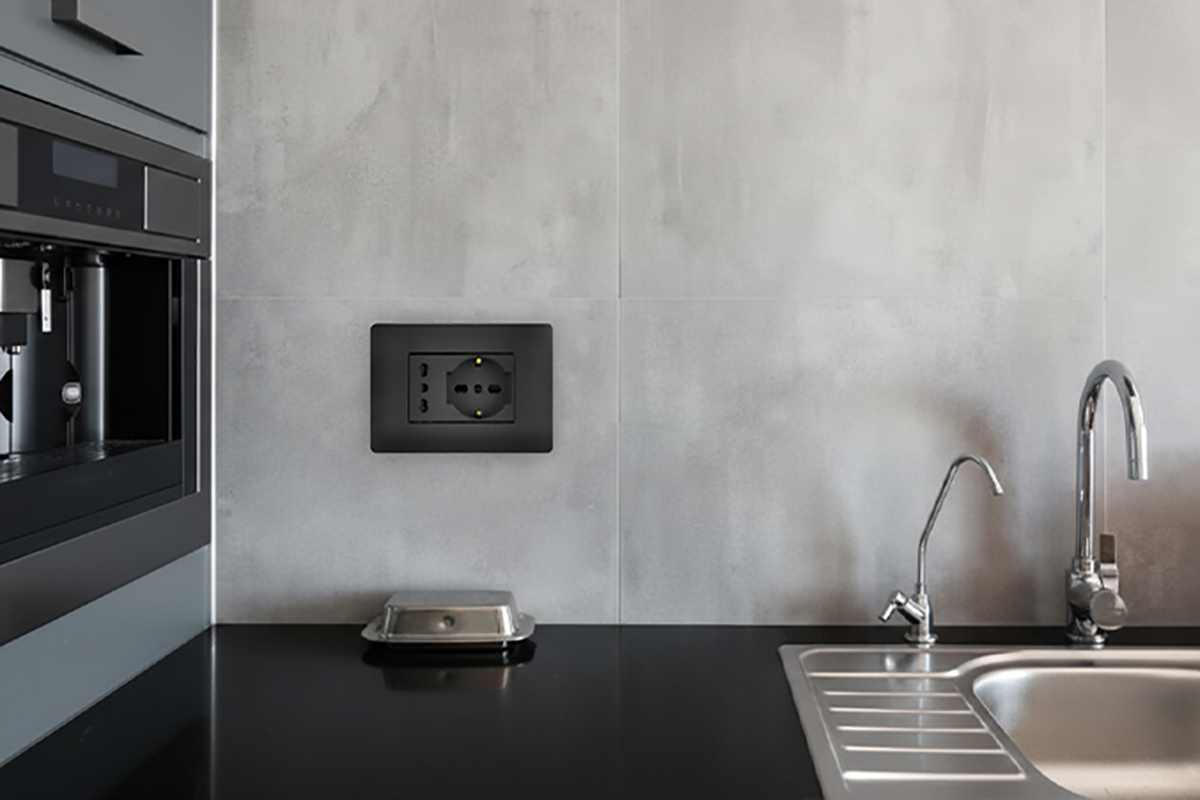
The modern kitchen requires a dedicated electrical system with separate circuits for each high-draw appliance. Inadequate planning will force the use of extension leads and adapters, creating real safety risks.
- 3–6 sockets above the worktop, 10–15 cm from the top
- Dedicated 16A circuit for dishwasher
- Dedicated 16A circuit for fridge
- Dedicated 32A circuit for induction hob
- Dedicated 10A circuit for electric oven
- Minimum 2.5 m distance between sockets and sink
- IP44-rated sockets in wet zones (zone 1–2)
Prof. Vincenzo Pazzi
Functional
Lighting
Correct light to work safely and comfortably
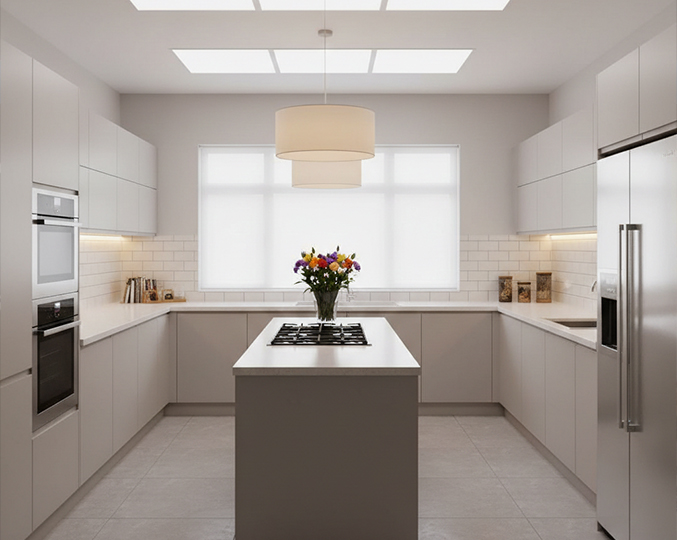
A professional lighting design layers three complementary levels in the kitchen. Light must be planned at design stage, not added afterwards: correctly positioning light points requires knowing where the worktops will be.
General Light (Ambient)
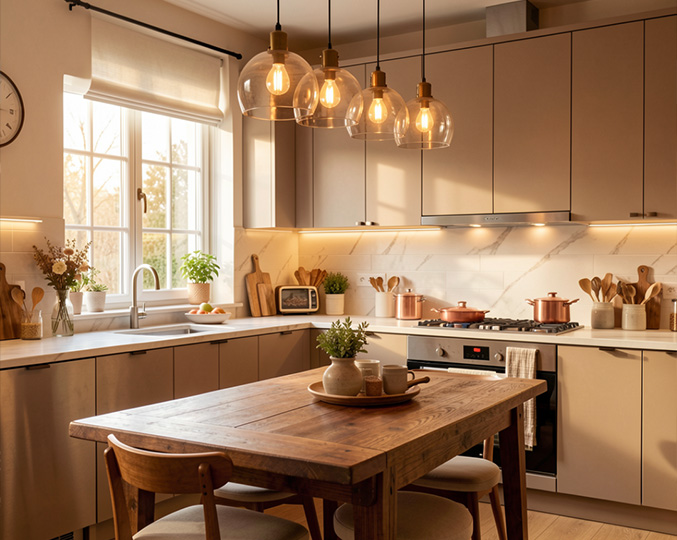
Diffuse lighting throughout the space. Must eliminate shadow zones and ensure uniform visibility. Typically LED ceiling lights or light tracks. Colour temperature: 3,000–4,000 K. Output: 300–500 lux total.
Worktop Light (Task)
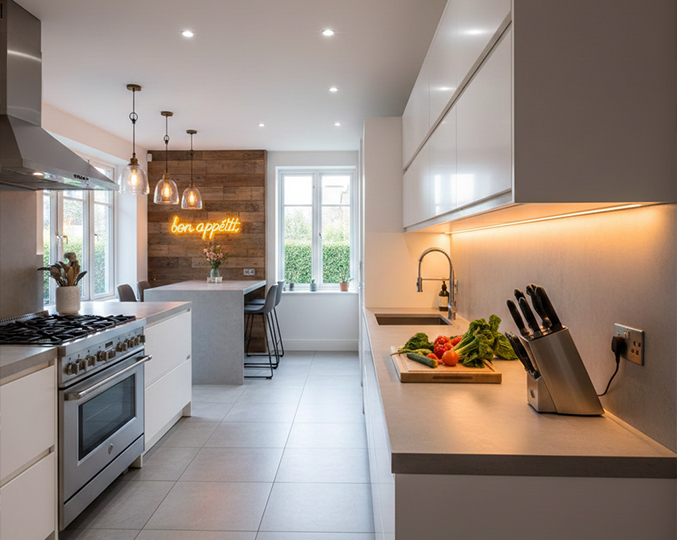
Direct, targeted lighting under wall units, on the hob and in the preparation area. Fundamental for safety. Under-cabinet LED strip with diffuser, at least 500 lux on the surface. Must not create shadows when cutting. Temperature: 4,000 K (neutral-cool light, stimulating and accurate).
Decorative Light (Accent)
LED strips, pendant lights over the island, internal lighting for glazed cabinets and shelves. Creates atmosphere and enhances aesthetics. Temperature: 2,700 K (warm and welcoming). Must never be the only light source in the kitchen.
Prof. Vincenzo Pazzi
Safety
Regulations
Knowing the law protects the designer and the client
In Italy, the design and installation of kitchen systems is regulated by a series of technical and legislative standards that have the force of law. Ignoring them is not only dangerous: in the event of damage, non-compliance can invalidate the insurance policy and generate civil and criminal liability.
Systems in buildings
Ministerial Decree 37/2008 regulates the design, installation, modification and maintenance of systems within buildings. All interventions on electrical, gas and plumbing systems require a licensed installer and the issue of a Declaration of Conformity (DiCo).
Electrical systems in residential premises
Defines safety zones in wet areas (bathrooms and kitchens), requirements for sockets in zones 1 and 2, minimum distances from water and gas, and separate circuits for each high-draw appliance in the kitchen.
Gas systems in residential buildings
Fundamental technical standard for gas systems. Defines materials, pipe positioning, ventilation and aeration of rooms with gas appliances. Installation must be carried out by a company authorised under D.M. 37/2008.
Building ventilation
Regulates the performance of components and products for residential ventilation, including range hoods. Defines minimum flow rate requirements and test procedures for product certification.
Safety in the workplace (professional kitchens)
For professional kitchens in restaurants, canteens or farm stays, the Consolidated Safety Act applies. It defines obligations for non-slip floors, emergency exits, safety distances between equipment, burn protection.
Prof. Vincenzo Pazzi