Materials for Doors
and Structure
Resistance, hygiene and aesthetics over time
The choice of materials is never purely aesthetic: every kitchen surface must resist heat, moisture, grease and detergents for at least 15–20 years. Knowing the technical characteristics of materials is a prerequisite for a solid design.
Laminate (HPL)
The most widespread material for doors and cladding. Economical, available in endless finishes (matte, gloss, wood effect, metal). Resistant to surface scratches. Applied on quality chipboard (CARB2) to avoid emissions.
Lacquered (matte or gloss)
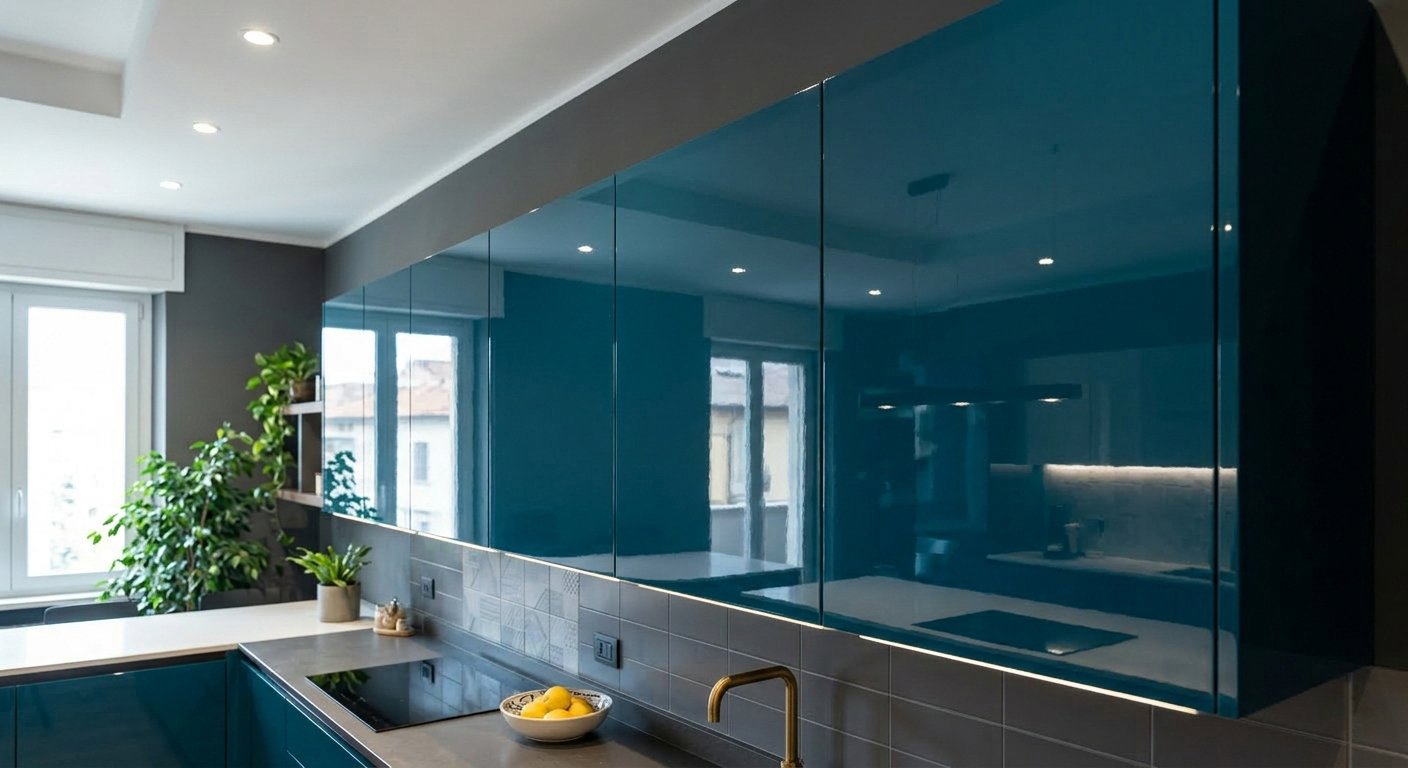
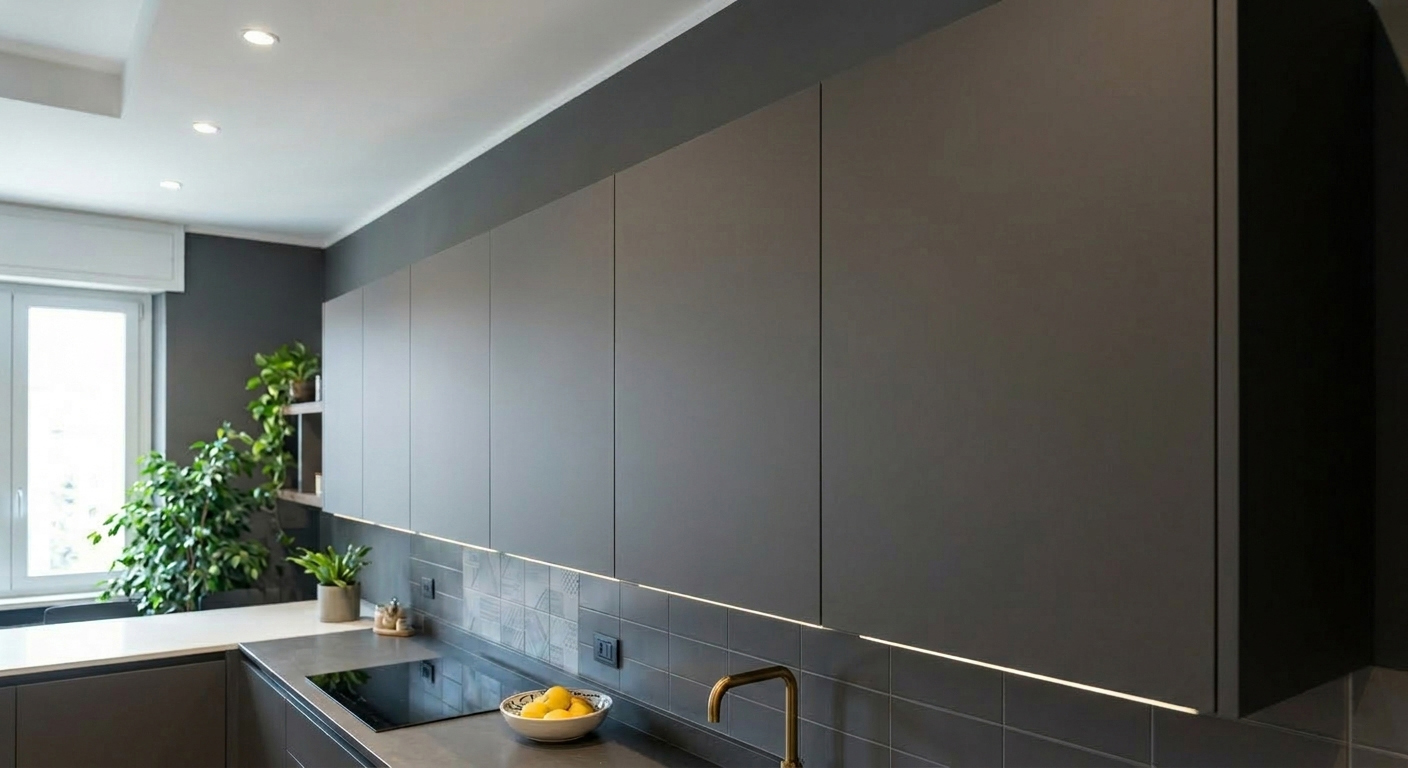
High-quality finish on moisture-resistant MDF. High-gloss lacquer creates bright and highly elegant environments, but shows every fingerprint. Matte lacquer (soft touch) is more practical and modern, with a velvety feel.
Fenix NTM® / ABET HPL
New-generation material: nanotechnology that provides fingerprint-resistant, scratch-resistant and self-regenerating (with heat) matte surfaces. Sophisticated aesthetics, pleasant to the touch. Ideal for doors and worktops.
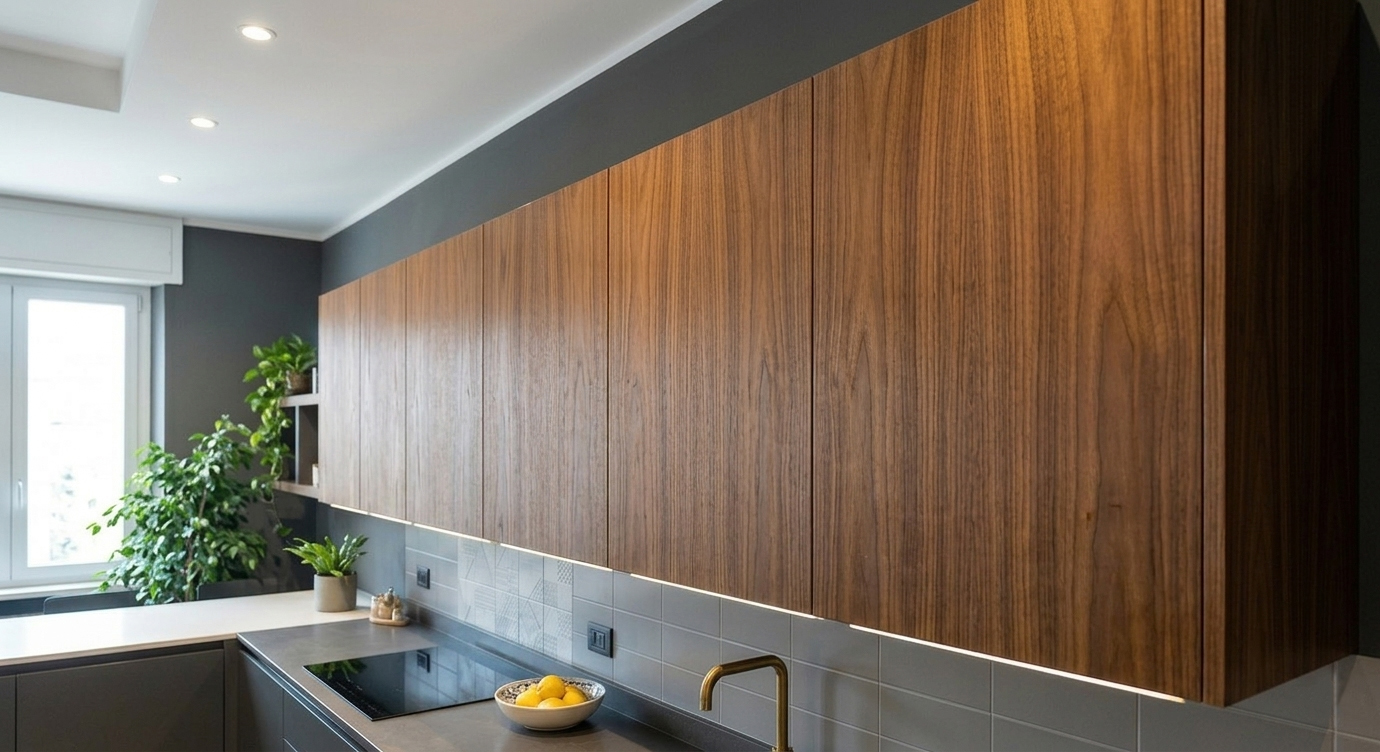
Solid Wood / Veneered
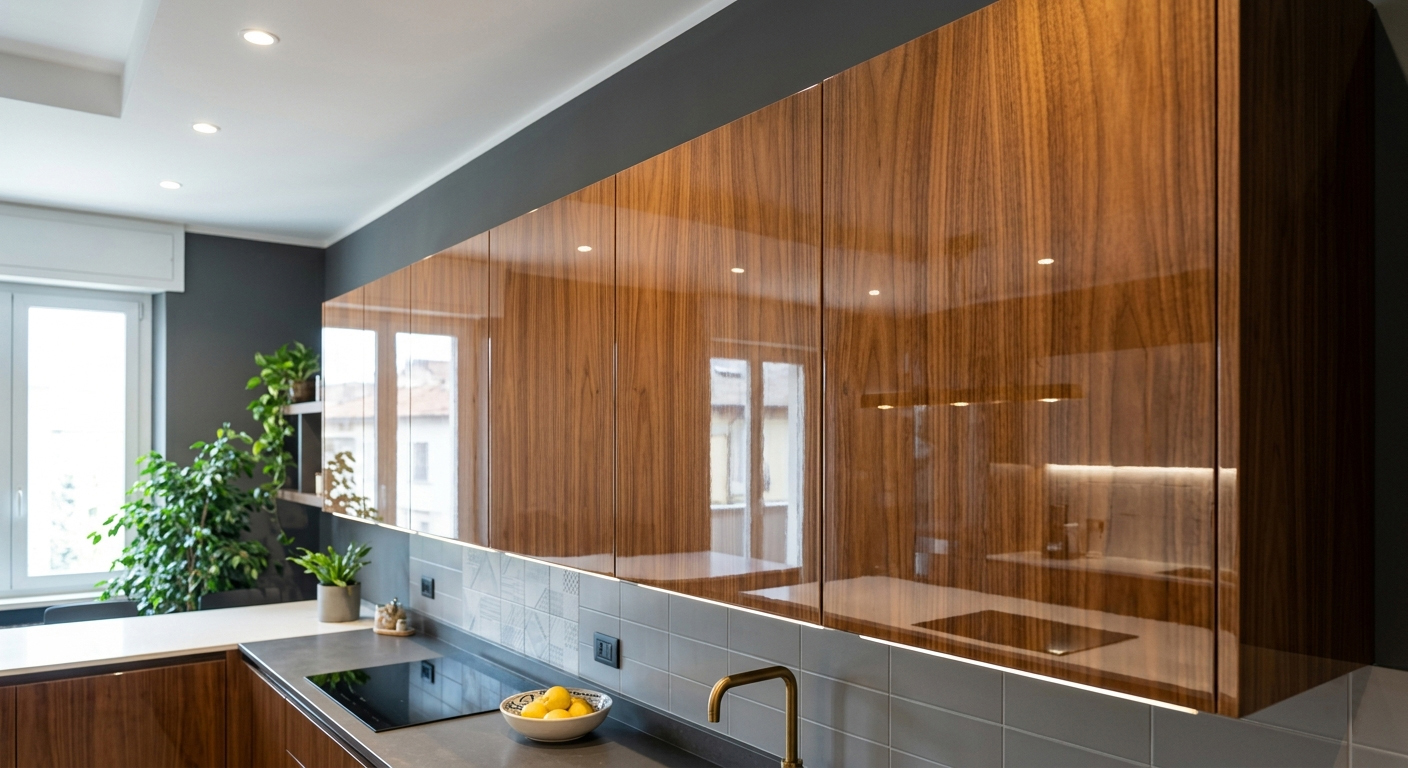
The traditional material par excellence. Solid wood (oak, walnut, cherry) is the most prized but requires periodic maintenance with oil or wax. Veneered wood is more stable than solid, with identical aesthetics and lower cost.
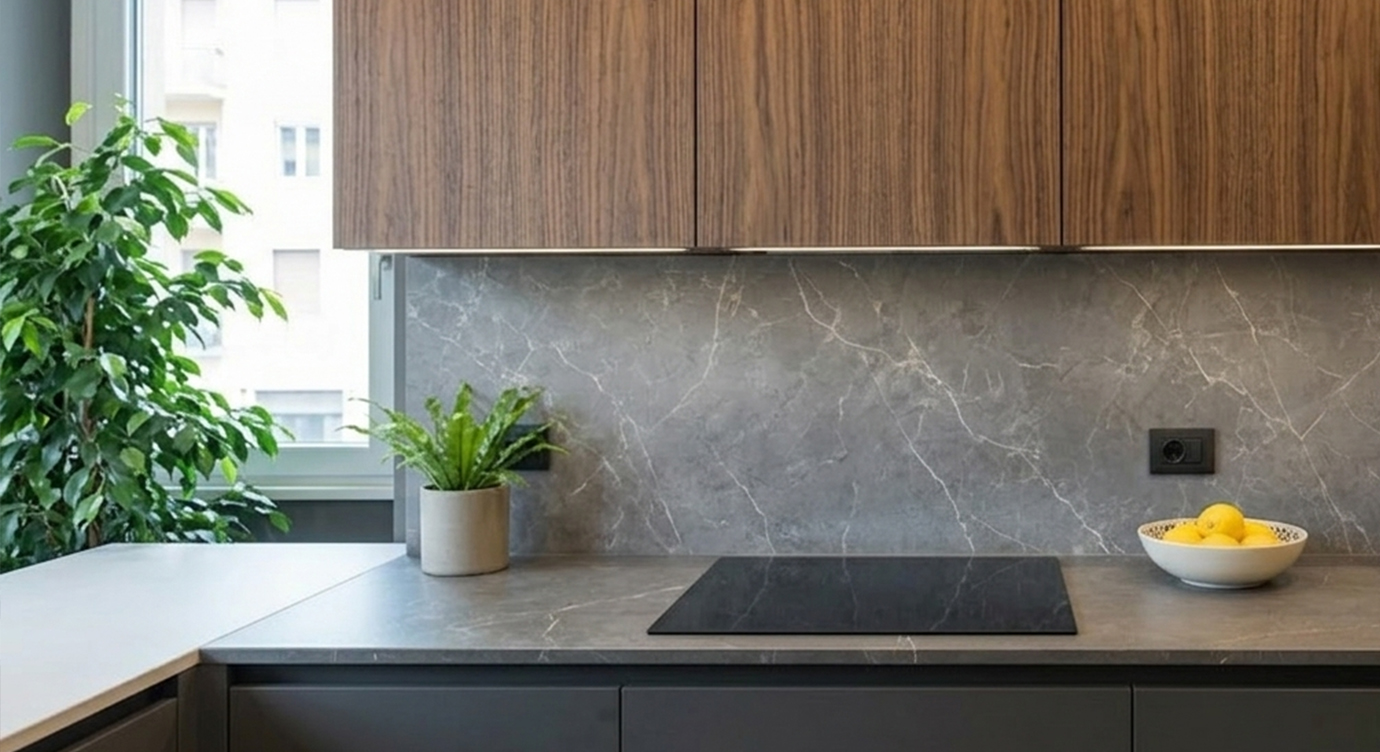
Composite Quartz
For worktops: 93% natural quartz + 7% polymer resins. Very hard, non-porous, does not absorb stains or bacteria. Resists impact better than natural stone. Does not resist direct heat above 150°C (use a trivet).
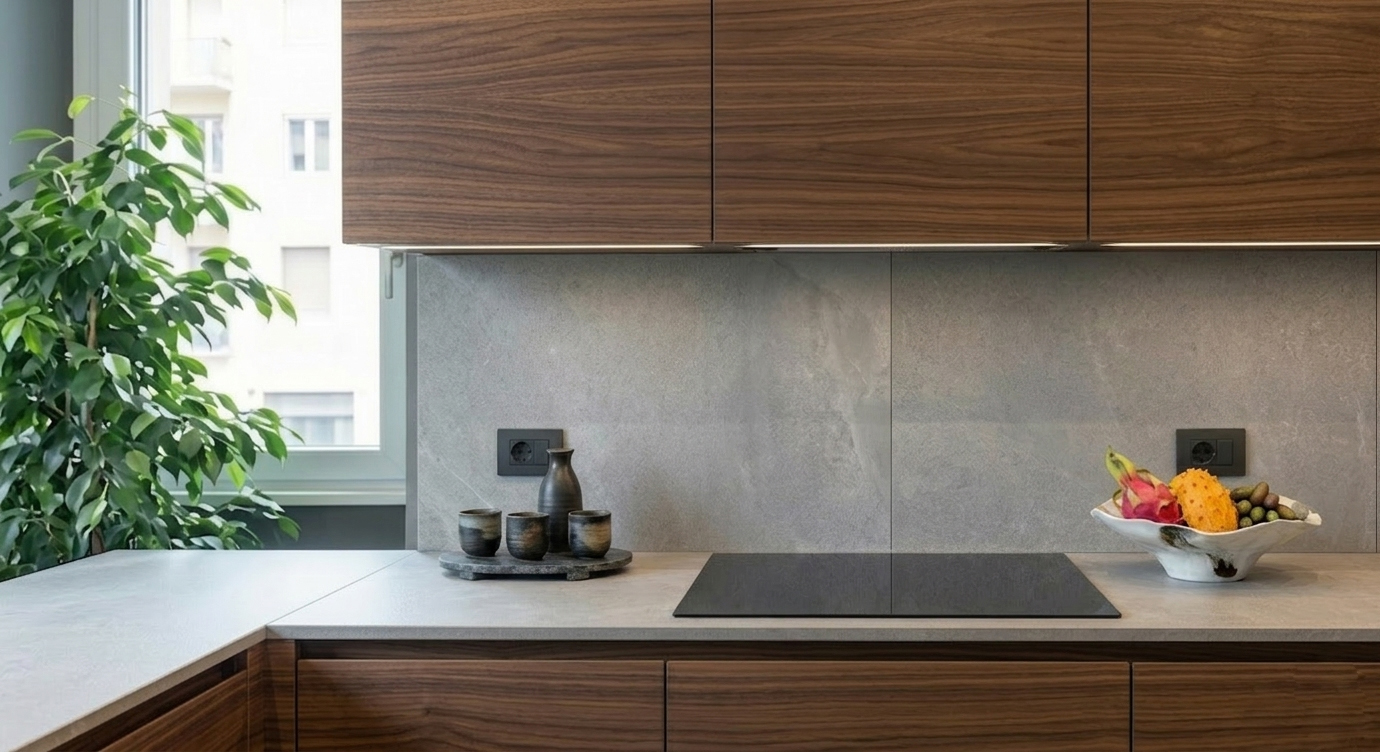
Porcelain Stoneware
For worktops and cladding: extremely heat-resistant (baking trays can be placed directly on it), non-porous. Extra-large formats (120×280 cm) allow jointless worktops. High weight: reinforced structure required.
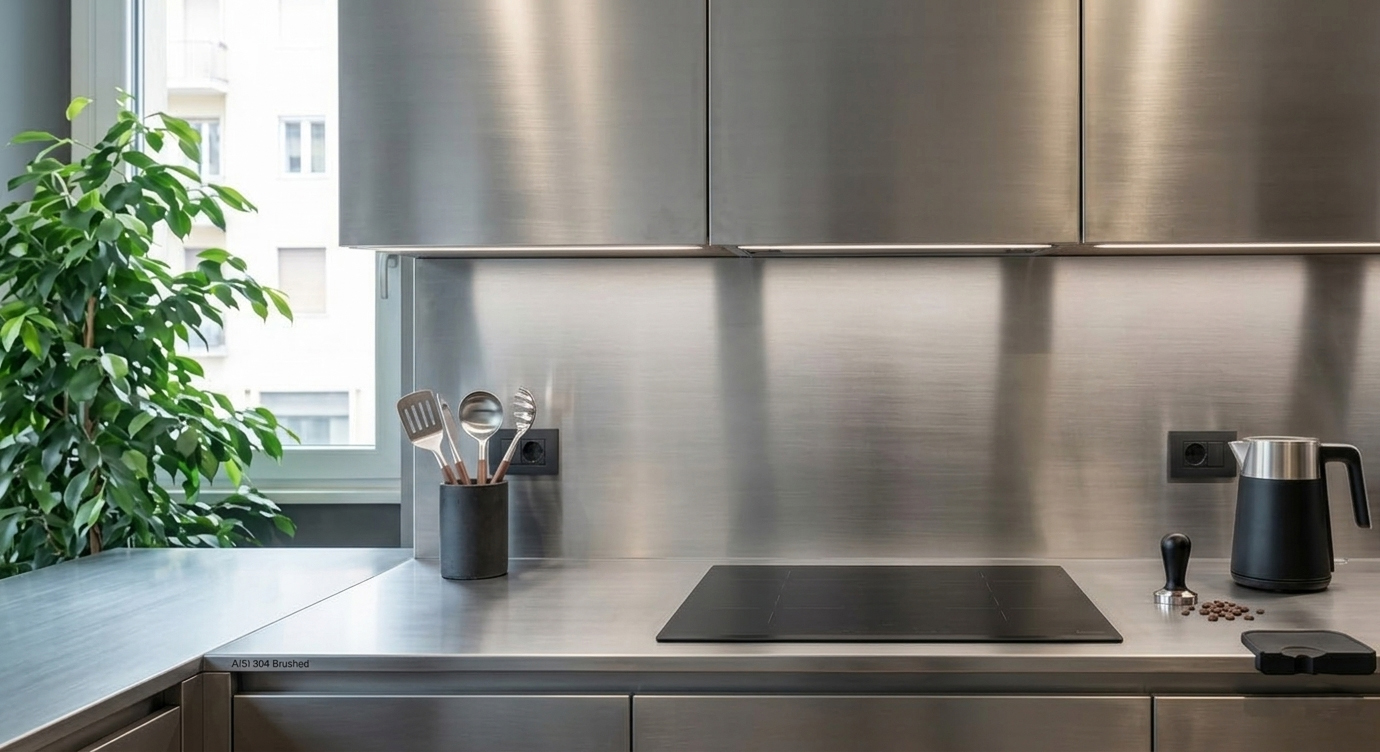
Stainless Steel AISI 304
The professional material par excellence. Totally hygienic, resistant to heat and corrosion, stainless. Industrial aesthetics widespread in contemporary design. Shows scratches and fingerprints: choose satin or brushed finish.
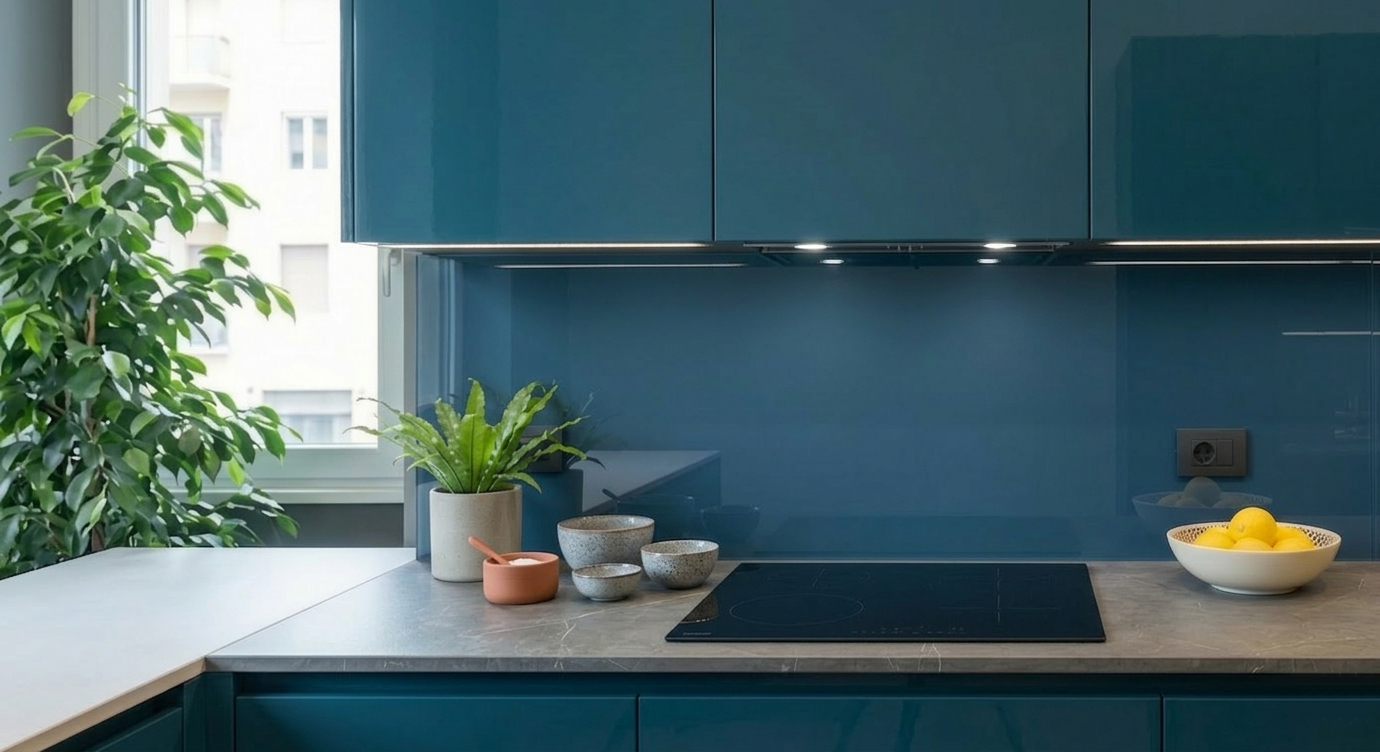
Back-lacquered Glass
Glass lacquered on the back: shiny, waterproof, easy to clean. Used for doors, cladding and splashbacks. The visible glass edge is a quality detail. Caution: scratches easily with metal objects.
Prof. Vincenzo Pazzi
Worktops:
Technical Comparison
The most used and mistreated surface in the kitchen
The worktop is subjected daily to cuts, scratches, heat, food acidity, detergents and impacts. The choice of the right material is never purely aesthetic: durability and ease of maintenance determine whether the worktop will still be beautiful in ten years.
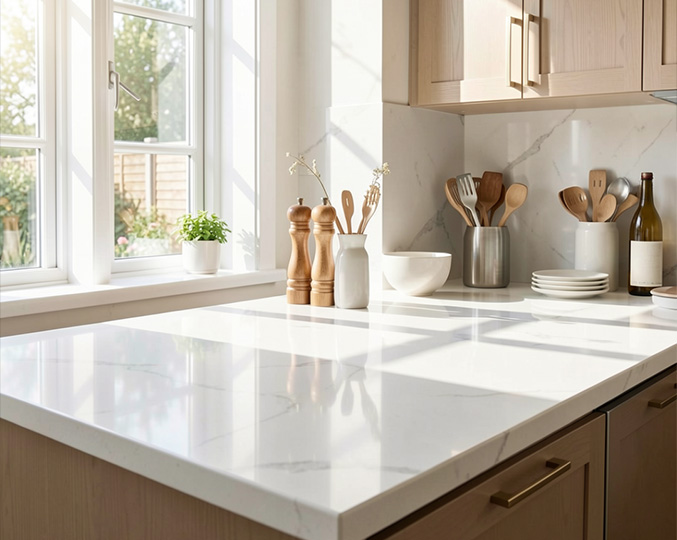
Composite Quartz
The most recommended choice for value for money. Very hard, non-porous, anti-bacterial, zero maintenance. Does not resist heat >150°C.
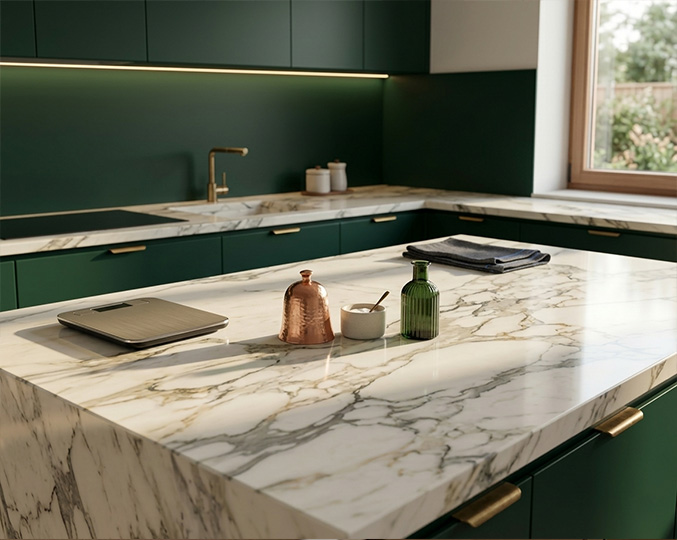
Natural Marble
The luxury material par excellence. Every slab is unique. Porous: absorbs wine, coffee, juices if not sealed. Requires annual maintenance with sealant. Very cold to the touch (ideal for pastry).
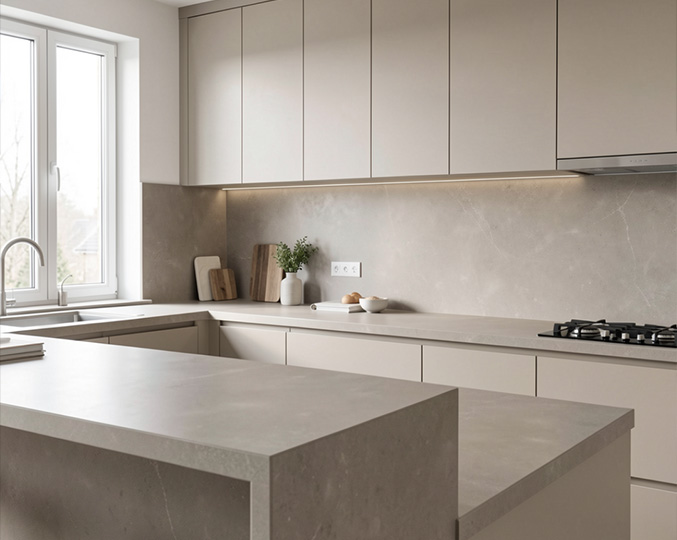
Porcelain Stoneware
Extremely resistant to heat and scratches. Extra-large formats eliminate joints. High weight (20+ kg/m²). Edges require specialist processing. Very versatile contemporary aesthetics.
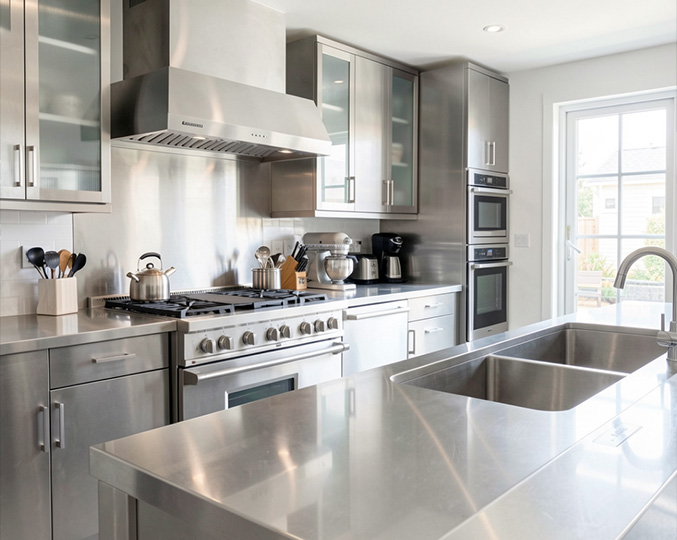
Stainless Steel
100% hygienic, very hot (cutting boards required). Professional standard in restaurant kitchens. Scratches easily (but the scratch is part of the aesthetics). Noisy on impact.
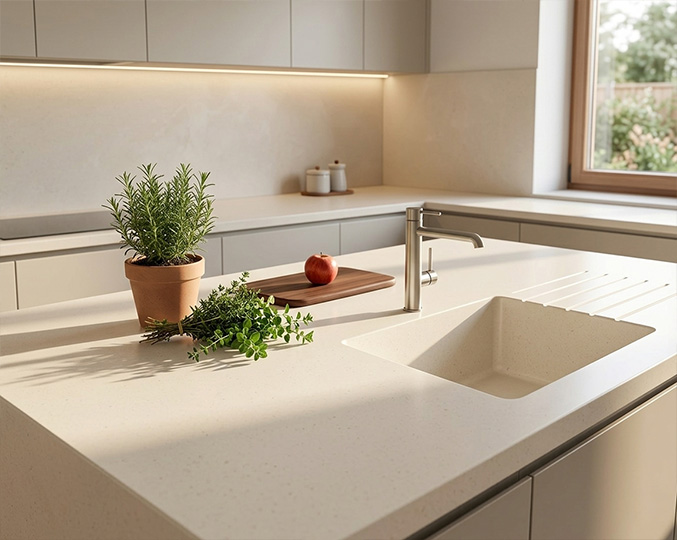
Corian® / Solid Surface
Completely homogeneous composite material: sink, worktop and splashback can be a single piece without joints. Surface scratches and burns can be repaired with fine abrasive paper. Modern, clean appearance.
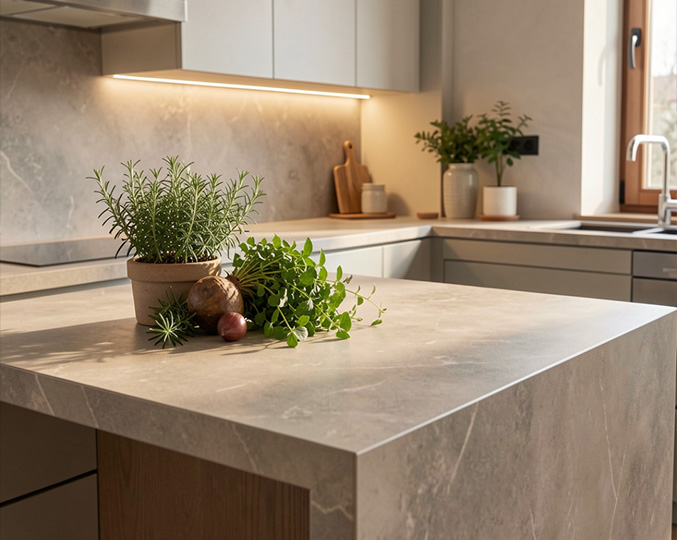
HPL Laminate
The most economical worktop. Good surface scratch resistance but vulnerable to moisture on edges and fracture under impact. Available in every finish. Ideal for entry-level or temporary kitchens.
Prof. Vincenzo Pazzi
Door
Types
The opening system conditions ergonomics and aesthetics
The type of opening is not just an aesthetic choice: it directly affects daily ergonomics, the space required to open, and the amount of light entering the cavities. In small kitchens, the wrong choice can make entire sections unusable.
The classic system, with a vertical hinge. Simple, economical, reliable. Requires front opening space (minimum 45–60 cm). Ideal for base units, wall units and tall units.
Opens upward with a piston arm. Typical of modern wall units: does not obstruct work below. Aventos (Blum) or push-to-open systems. Requires clear height above.
Slides sideways on a track. Does not require front space: ideal in narrow kitchens or near corners. Less accessible to internal corners. For lightweight doors (glass, aluminium).
Opens with a gentle push, without handles. Clean, linear aesthetics. Available with integrated damper (TIP-ON Blum). Ideal for handle-free contemporary design kitchens.
Two or more panels fold on themselves. Allows total cavity opening with reduced footprint. Used for large pantries or to hide an entire kitchen in a cupboard (kitchenette).
Shelves or open cavities without doors. Living aesthetics, easy access. Emphasises visual clutter, exposes to grease. Use only for everyday items with good aesthetics.
Prof. Vincenzo Pazzi
Interior
Systems
Internal organisation is as important as external organisation
The inside of the units is invisible but determines the real functionality of the kitchen. A drawer with the correct organiser has three times the useful capacity of a plain drawer of the same size. The quality of the sliding systems (full-extension guides with soft-close) is a reliable indicator of the general quality of the kitchen.
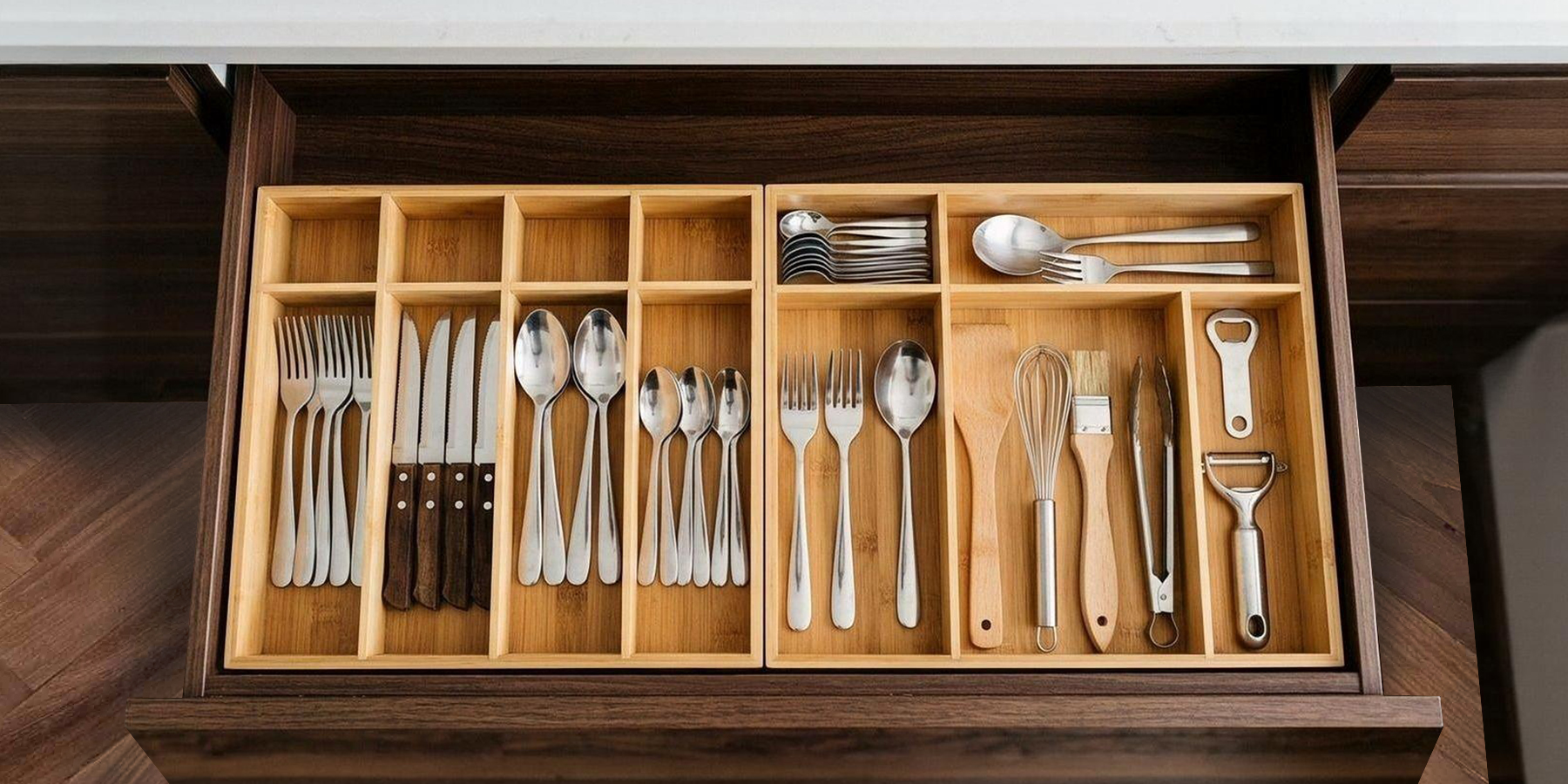
Modular dividers in bamboo, wood or recycled plastic for the cutlery drawer. Quality ones adapt to the drawer width without play. Avoid fixed dividers: they limit flexibility.
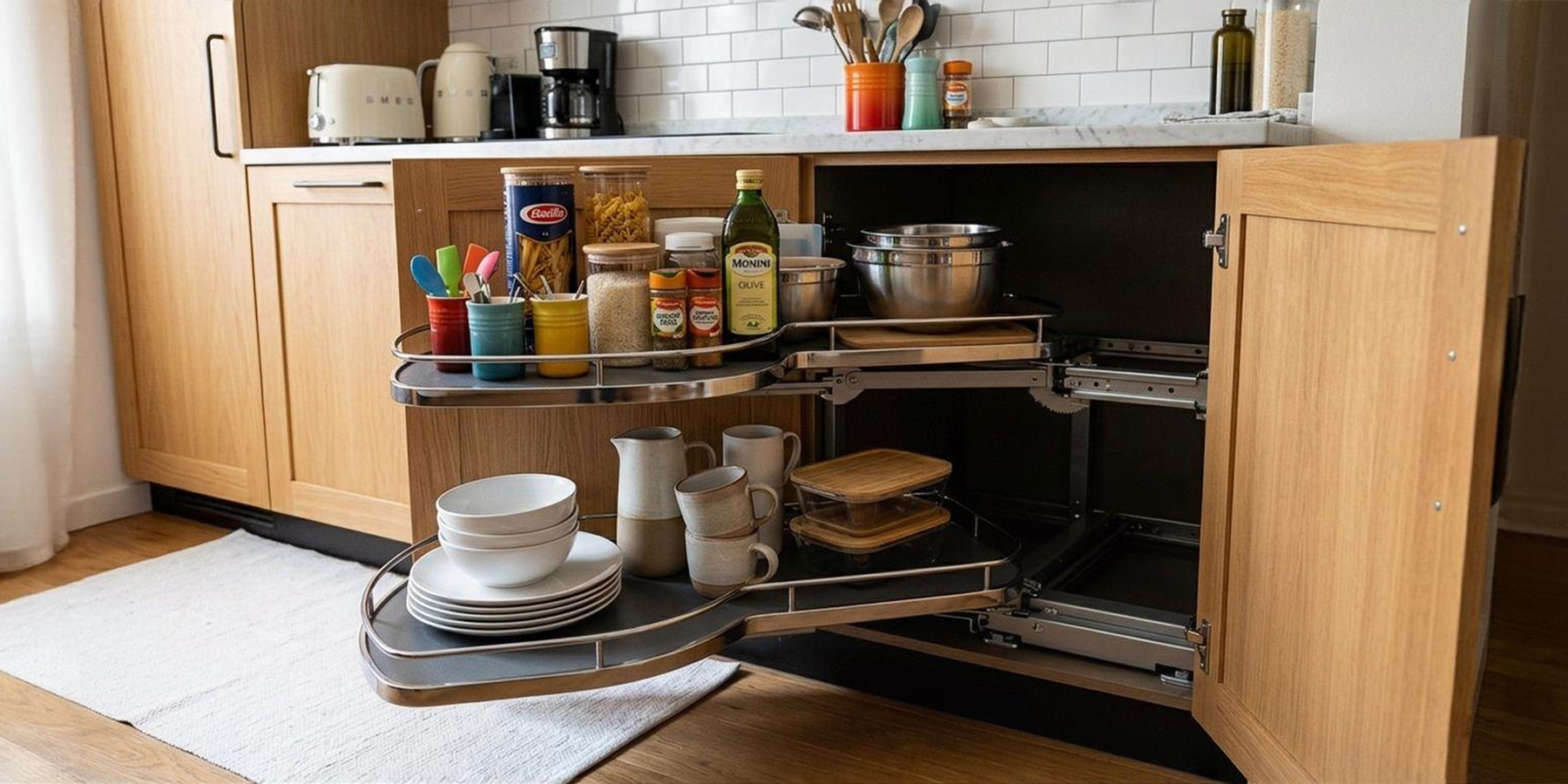
The kitchen corner is one of the least exploited spaces. Rotating or pull-out basket systems (Blum, Häfele) recover almost 100% of the corner space, transforming a problem into a storage opportunity.
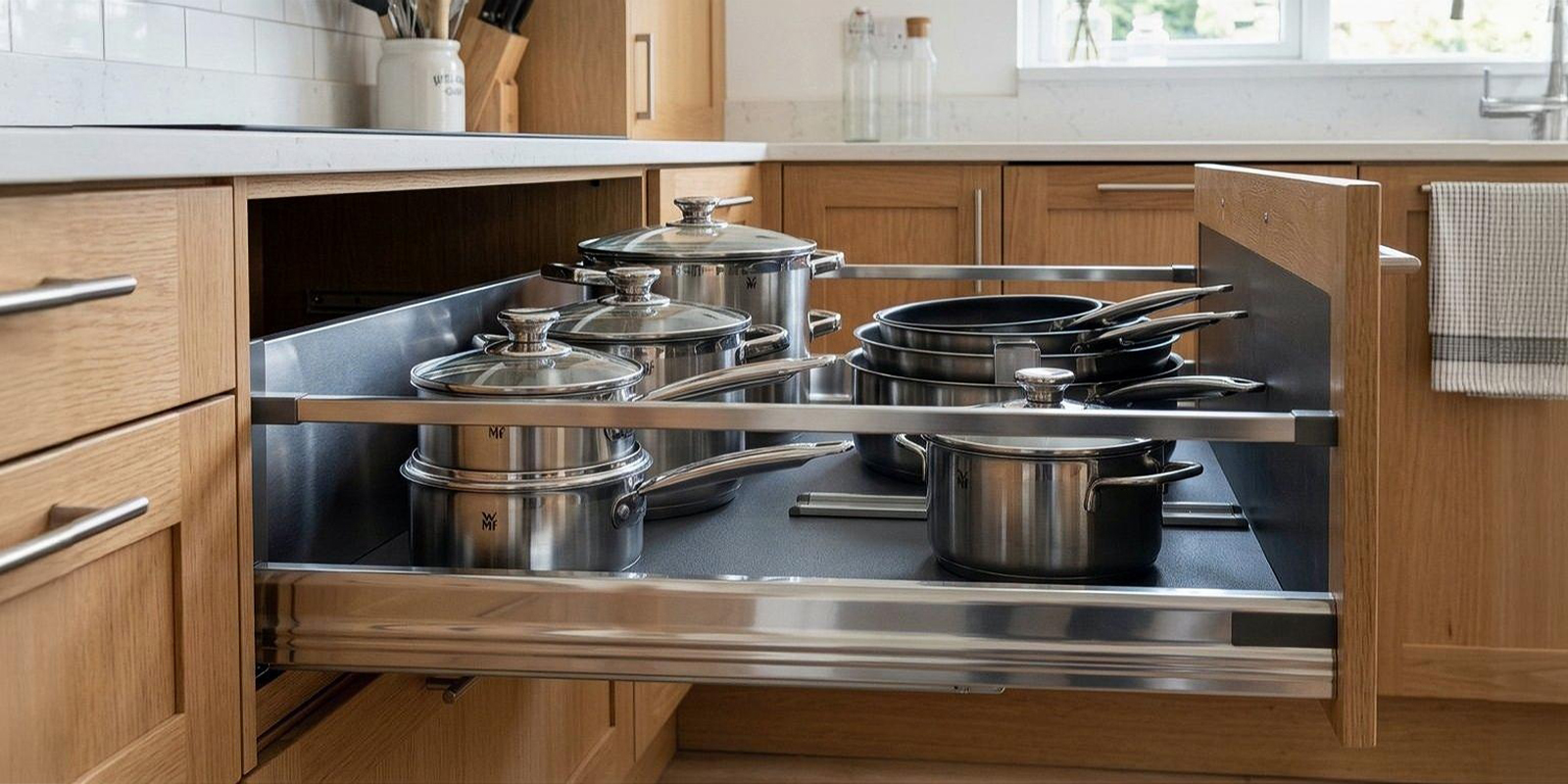
Complete replacement of doors with deep pull-out drawers (height 30–36 cm). Allow you to see and reach all the contents without bending. Golden rule: more drawers, fewer low doors.
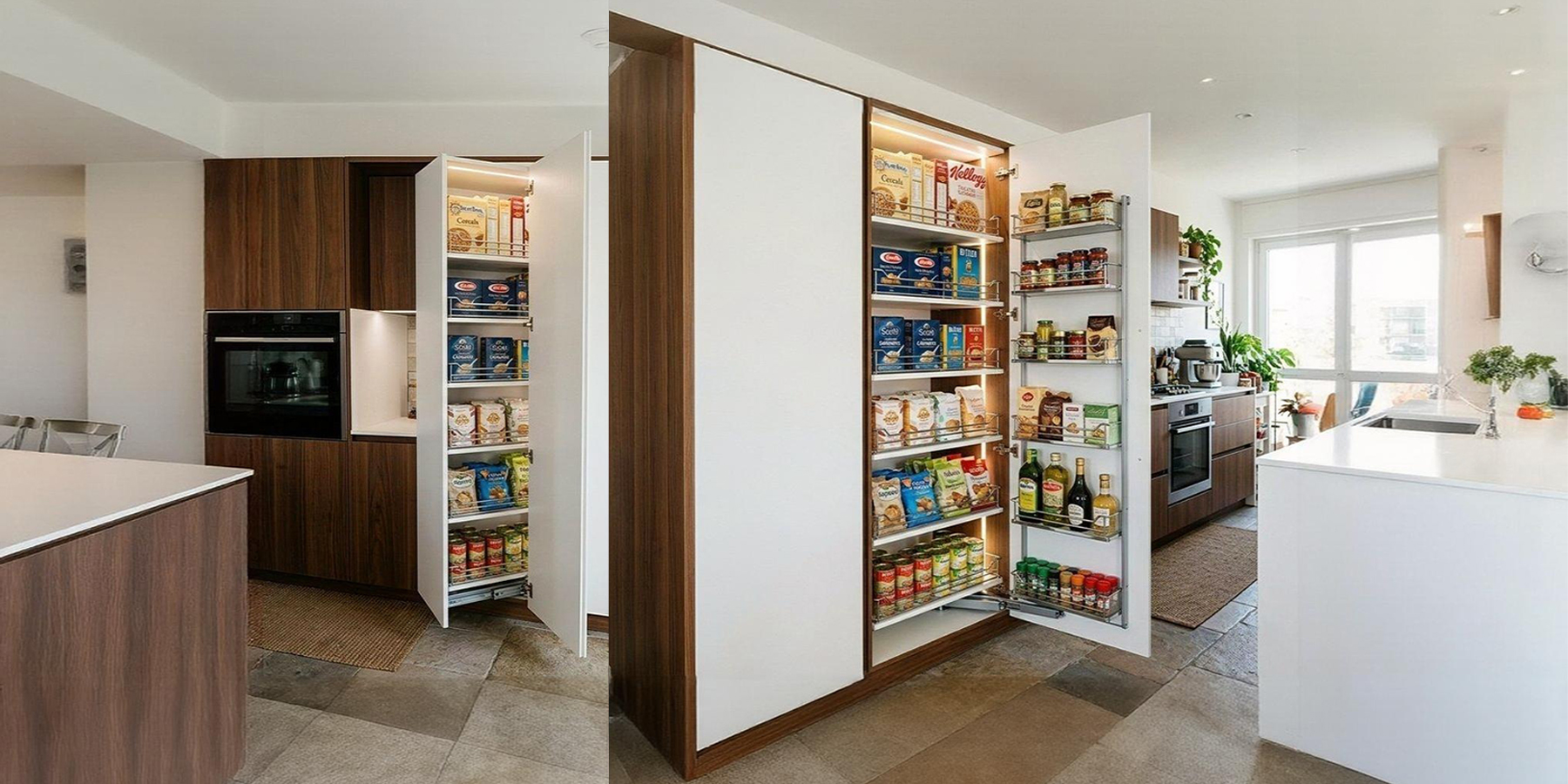
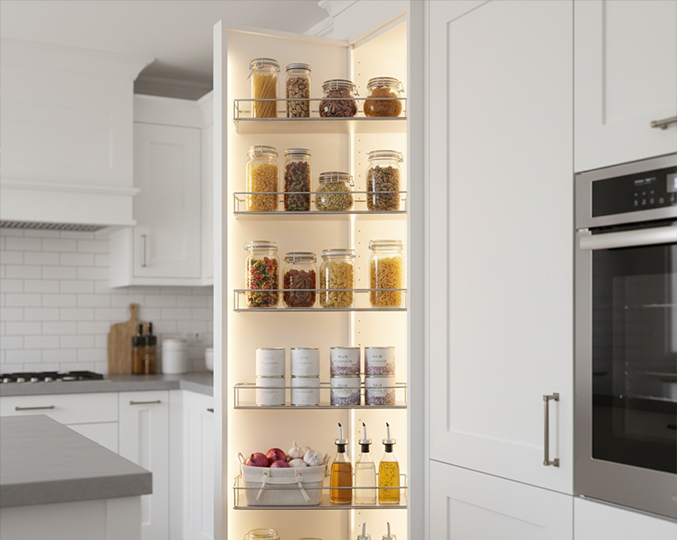
Full-height columns with multiple pull-out baskets. Allow you to organise and access all tinned foods, spices and dry goods. Capacity far superior to traditional full-height doors.
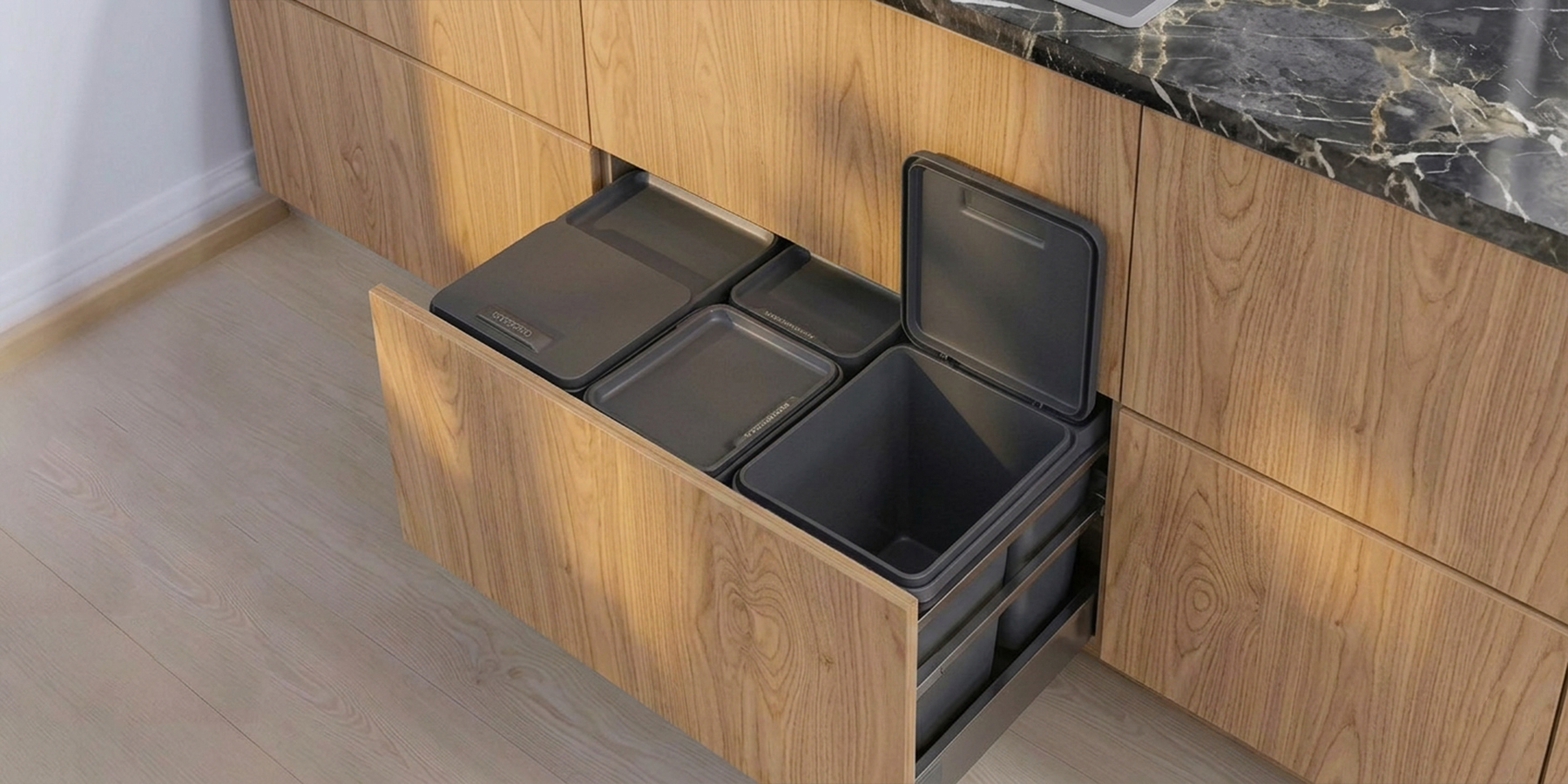
Systems with 2–4 separate containers for waste sorting, hidden in a drawer or in a door under the sink. Pull-out with door opening (tandem), hygienic and invisible from outside.
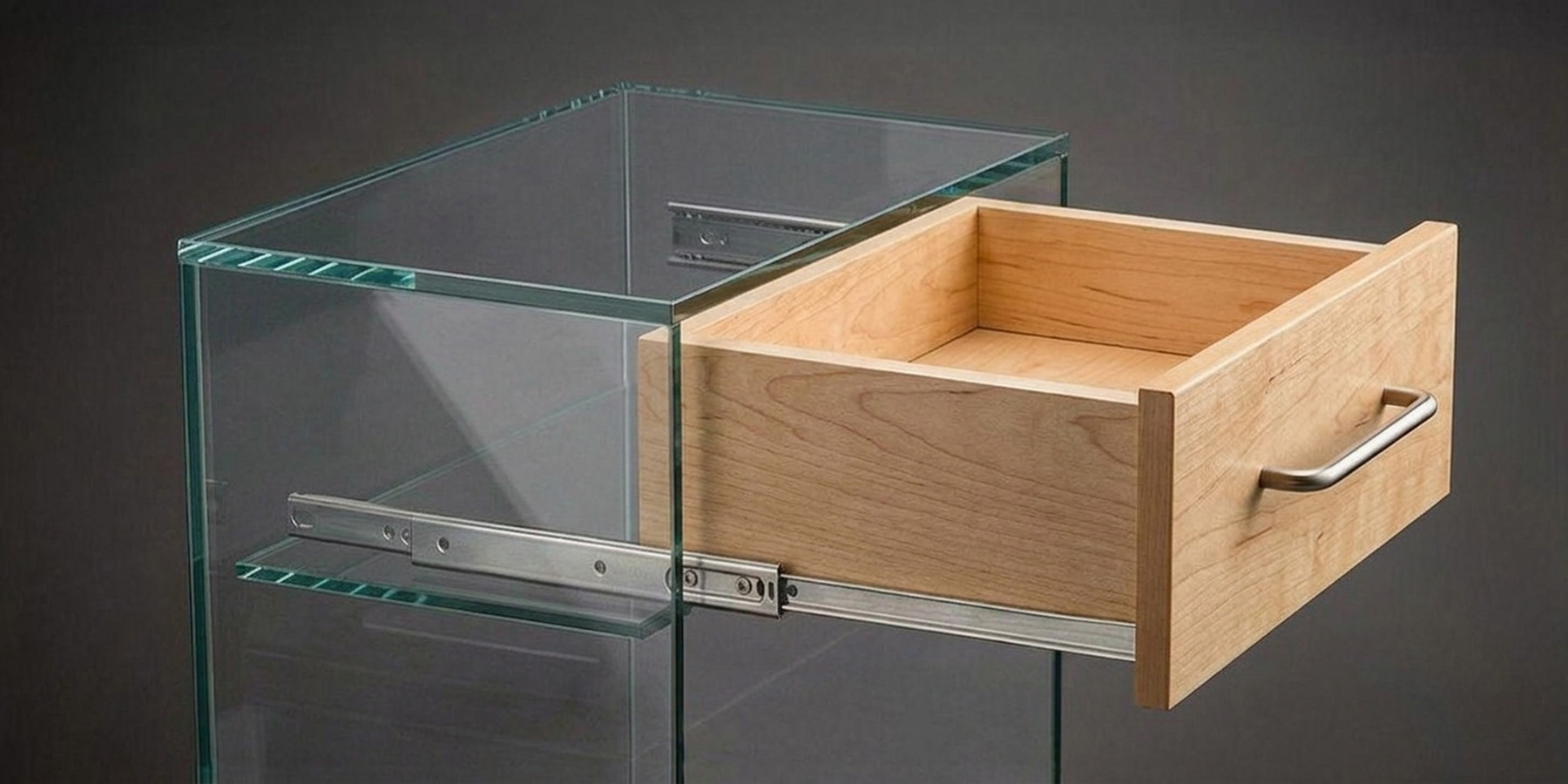
The most important quality parameter for drawers: 100% full-extension runners (all contents visible) with soft-close mechanism. Blum Legrabox, Hettich ArciTech, Grass Nova Pro are the top of the range.
Prof. Vincenzo Pazzi
Space
Optimisation
Every centimetre has a design value
In the kitchen, space is always insufficient. Smart storage solutions can increase the useful capacity of a kitchen by 40–60% without increasing its size. The experienced designer thinks vertically, uses corners and never leaves voids between columns and ceiling.
Prof. Vincenzo Pazzi
Common Mistakes
to Avoid
Knowing the mistakes is the first form of prevention
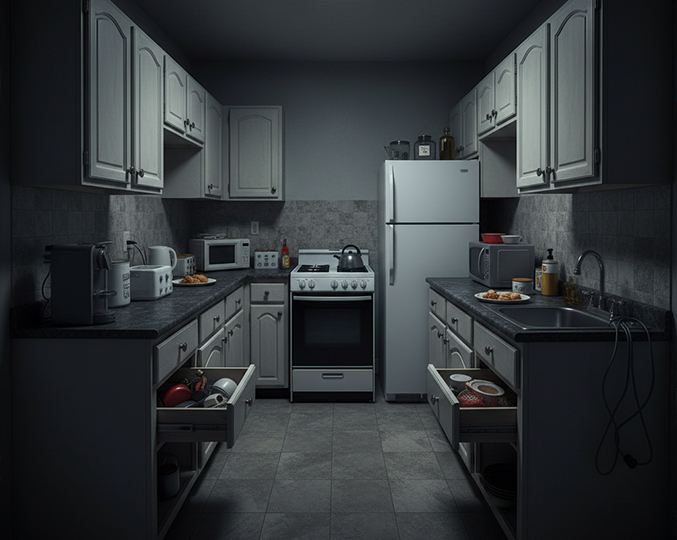
10 years of experience show that certain design errors always repeat themselves. Knowing them in advance is the most effective weapon for a successful project. Every error has a cost: not only financial, but in quality of life for years.
Prof. Vincenzo Pazzi
Design
Phases
From survey to final commissioning
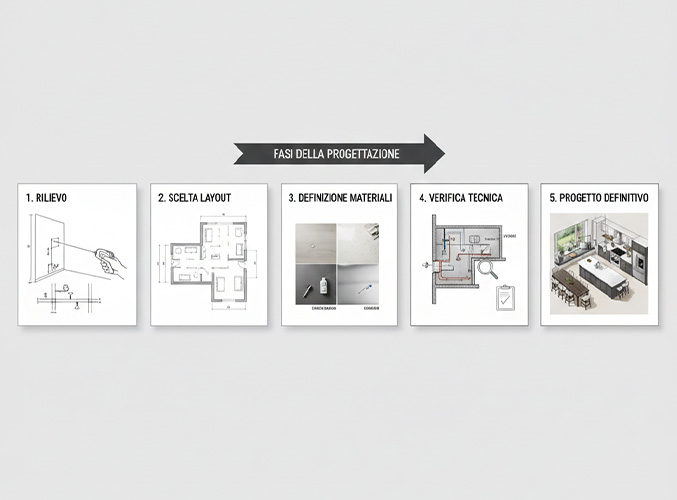
Professional kitchen design follows a well-defined process. Each phase must be completed before moving to the next. Skipping a phase means building on unstable foundations and accumulating problems that will manifest after installation.
Client analysis
Interview on cooking habits, household composition, budget, aesthetic preferences, lifestyle. Without this phase the project is anonymous.
Survey of measurements and systems
Precise millimetre-accurate survey of space and systems. Position of drains, sockets, windows, doors. Verification of slabs and load capacity.
Choice of layout and typology
Definition of configuration (L, U, linear, island) and architectural type (closed, open, semi-open) based on needs and constraints.
Definition of materials and finishes
Selection of door materials, worktop, appliances, opening systems, lighting. Presentation of samples to the client.
Technical and regulatory verification
Checking systems compatibility, verifying CEI 64-8, UNI 7129 regulations, safety distances, structural capacity.
Technical drawings and final quote
Dimensioned floor plan, elevations, materials sheet with codes, detailed quote per item. Contract signing.
Installation and commissioning
Delivery, professional installation, systems commissioning, release of documentation (DiCo systems), maintenance instructions to the client.
Prof. Vincenzo Pazzi