The Work
Triangle
The fundamental ergonomic principle
Developed in the 1940s by the University of Illinois, the work triangle describes the ideal path between the three main points of the kitchen. The original theory has evolved into the more modern concept of "functional zones", but the triangle remains the starting point of every project.


The distances between the three vertices of the triangle are not arbitrary: they are the result of decades of anthropometric studies. Respecting them means designing a kitchen that is used naturally, without wasted energy or risk of fatigue.
How to apply it
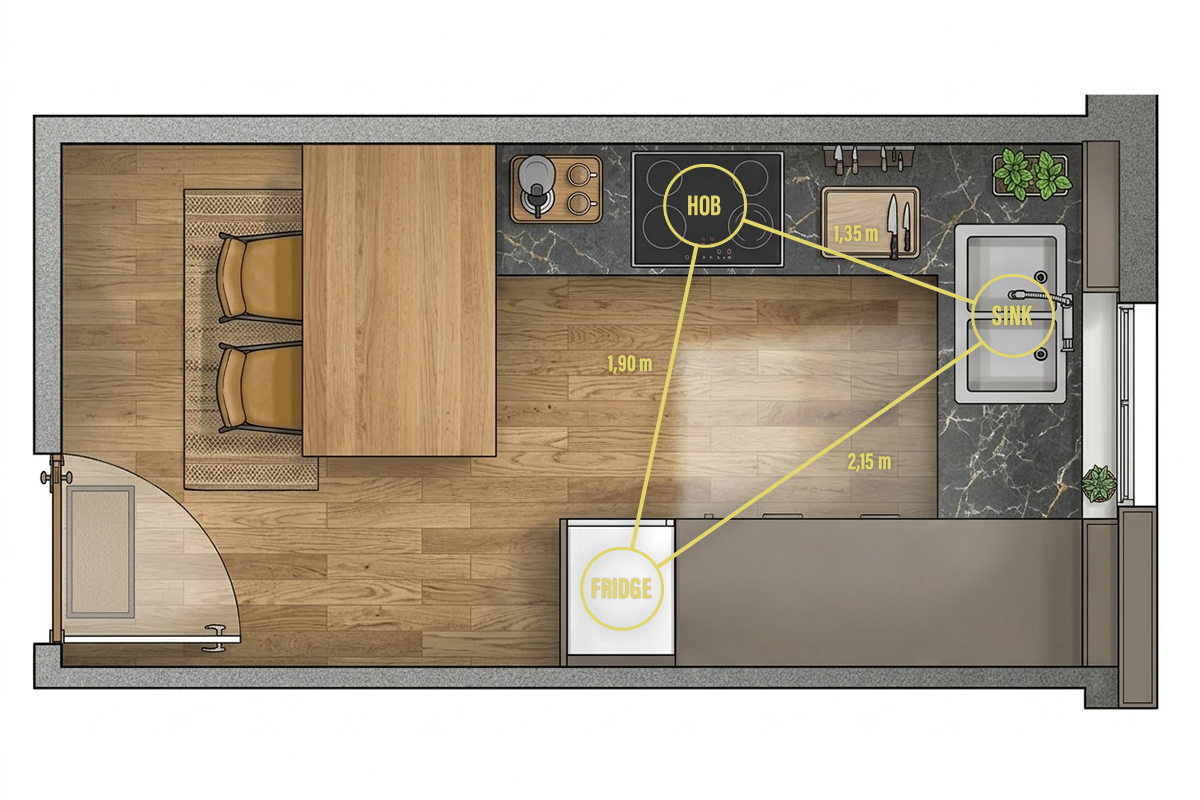
Work triangle applied to kitchen floor plan
Prof. Vincenzo Pazzi
The 5 Functional
Zones
Organise the kitchen by activity, not by furniture
The 5-zone model supersedes and integrates the work triangle: it does not only describe where the appliances are, but how the entire kitchen system works. Each zone must have adequate surface, storage and lighting for the activity it hosts.
Prof. Vincenzo Pazzi
Ideal
Work Sequence
Follow the natural flow of activities
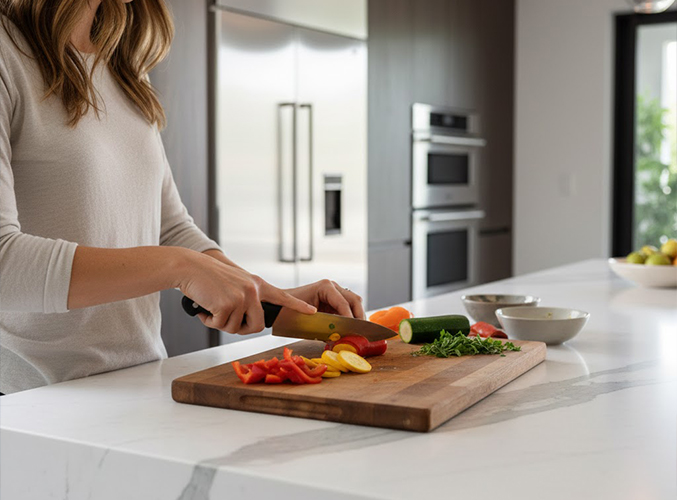
The work sequence is the thread that runs through the 5 functional zones. Organising furniture respecting this flow reduces unnecessary movements, decreases fatigue and increases safety, especially when handling hot trays or liquids.
Good organisation reduces unnecessary movements and improves overall efficiency. The ideal route should never be interrupted by other people passing through or by doors.
Prof. Vincenzo Pazzi
Standard
Heights
Dimensions designed for comfort and correct posture
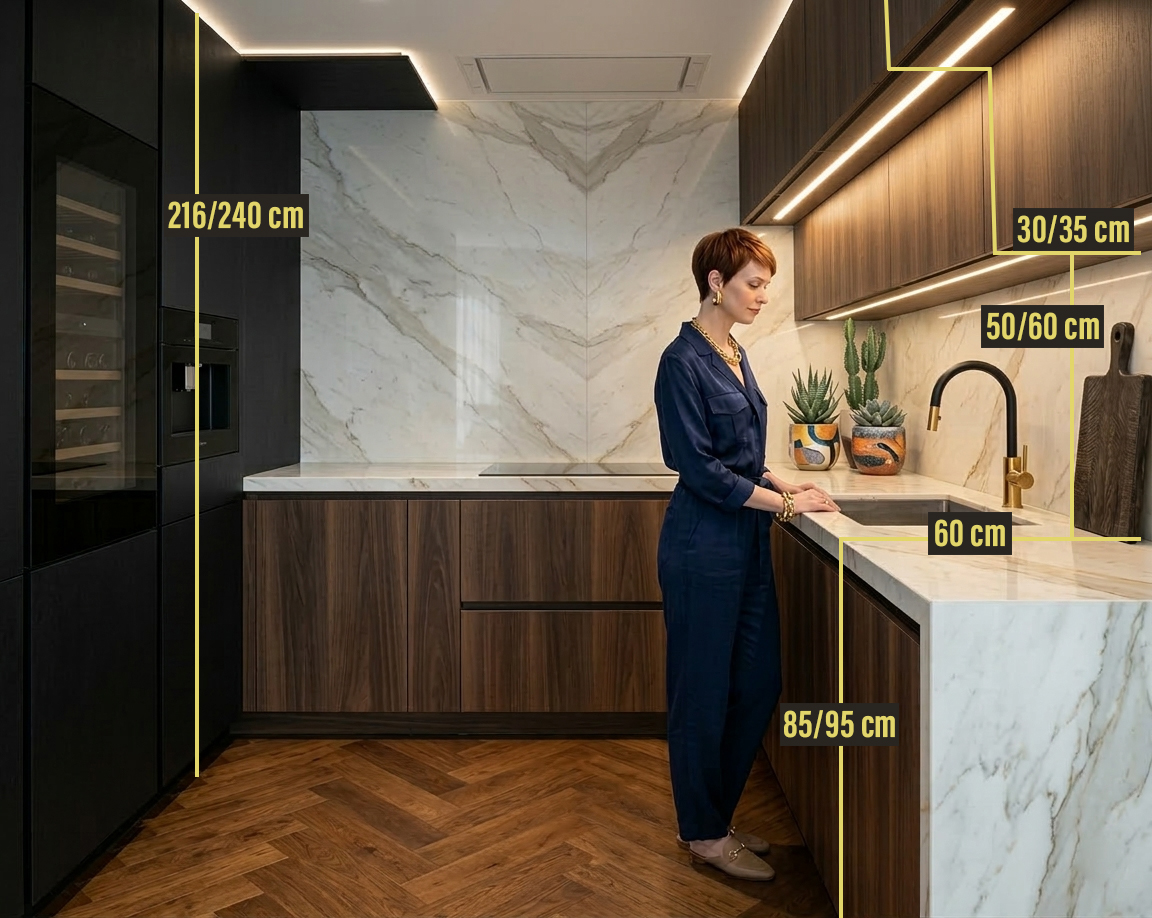
Standard ergonomic heights are the result of anthropometric studies conducted on thousands of subjects. Respecting them prevents chronic muscle fatigue, back and neck pain that afflict those who cook on poorly sized surfaces.
Prof. Vincenzo Pazzi
Circulation
Spaces
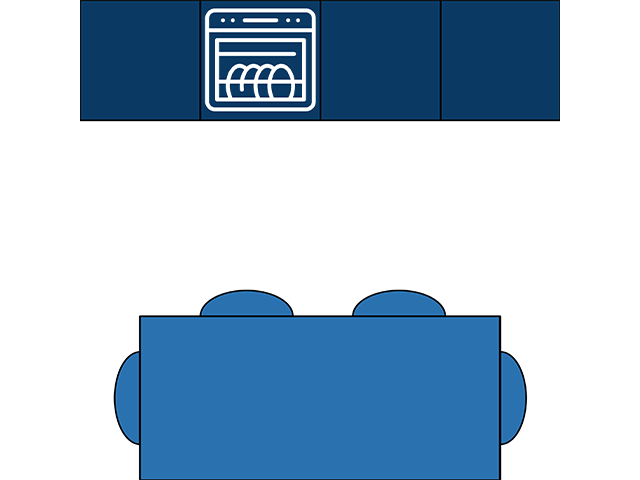
Ensure free movement and prevent accidents
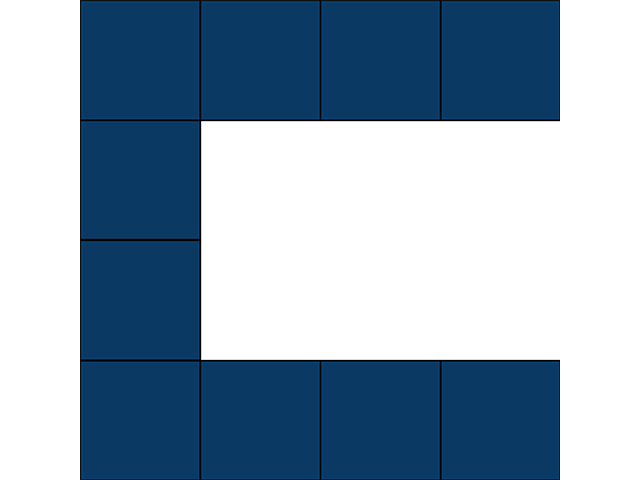
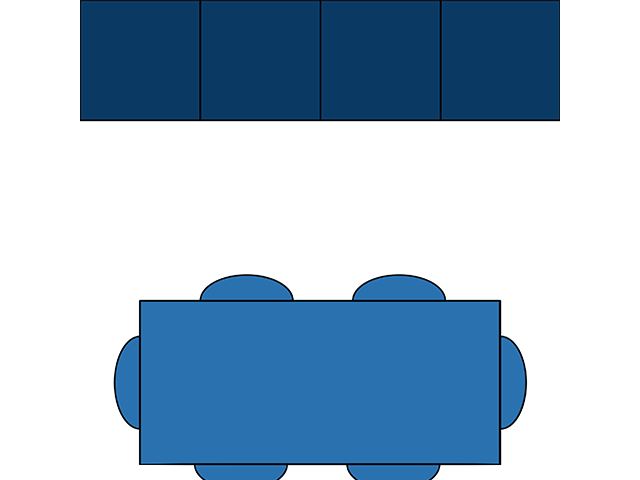
Minimum circulation spaces are not optional: they are ergonomic requirements that prevent collisions with open doors, falls with hot materials and difficulty accessing appliances. In a kitchen used by several people simultaneously, they should be increased by at least 20%.
Prof. Vincenzo Pazzi
The Worktop
in Detail
The most used surface in the entire kitchen
The worktop is the operational centre of the kitchen. Its size, depth, height and material have a direct impact on efficiency and comfort. An insufficient work surface is the number one cause of frustration in the kitchen.
The free worktop between sink and hob must be at least 60 cm. Ideal: 80–100 cm. To cook comfortably with two people, at least 120 cm of total free worktop is needed.
Standard: 60 cm (same depth as base units). In open kitchens with island or peninsula, it can reach 90–100 cm to add bar or breakfast functions.
The visible thickness of the worktop (front edge) greatly influences aesthetics: 2 cm for a light, modern look, 4–6 cm for a massive, artisanal effect, up to 10–12 cm for luxury natural stone worktops.
The joints between worktop and sink are the critical points for hygiene. The flush or undermount sink eliminates joints. The top in continuous material (e.g. Corian) is the most hygienic solution as it eliminates any surface interruption.
Fundamental in areas adjacent to the hob. Quartz and natural stone resist well. Laminate and Corian require a trivet. Steel is the most resistant overall.
Every worktop must have direct lighting (LED under cabinet or ceiling track). The shadow of the working body is a safety risk. Ideal colour temperature: 3,000–4,000 K.
Prof. Vincenzo Pazzi
Accessible
Kitchen
Design for everyone, not just the young and able-bodied
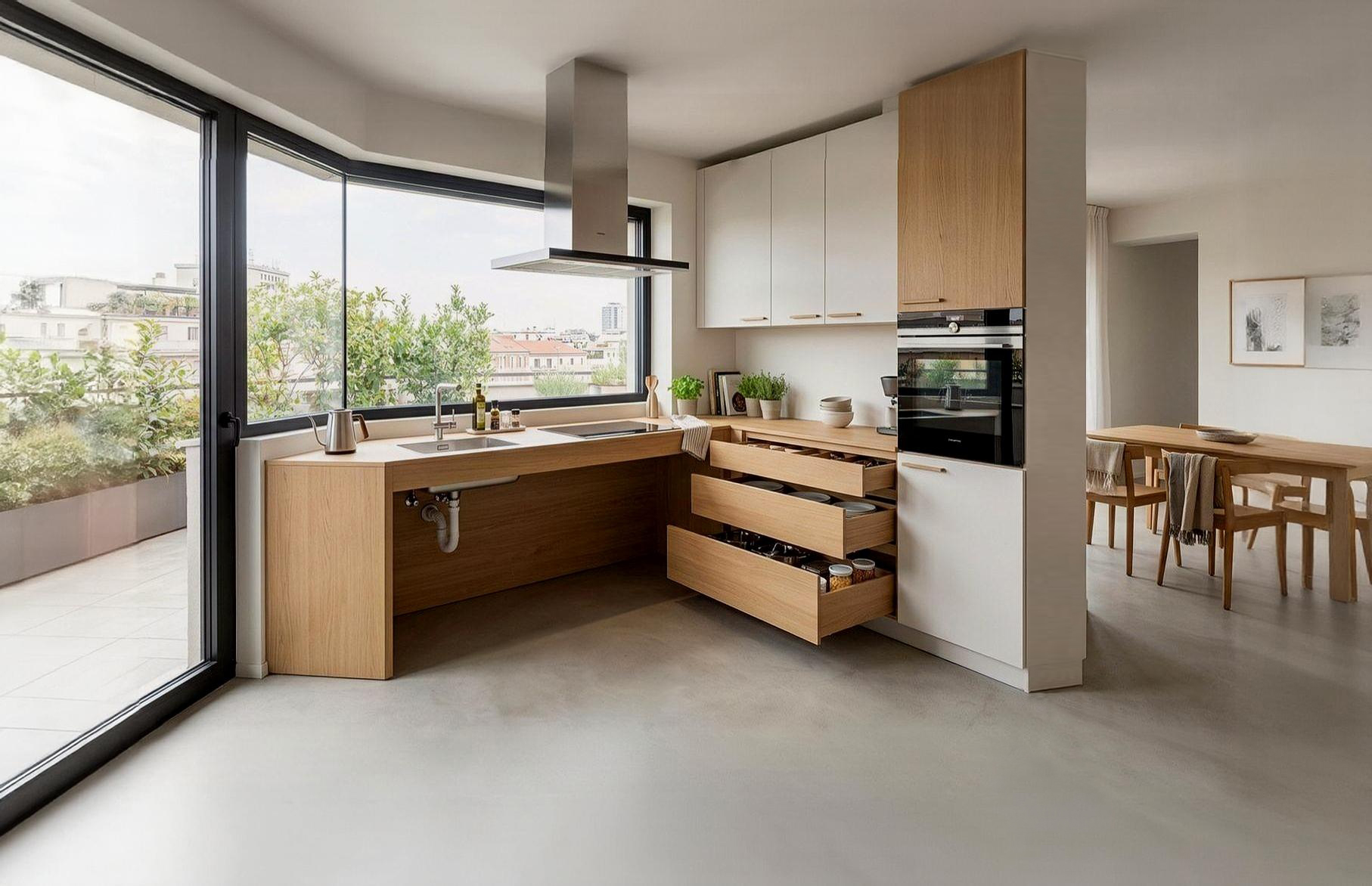
Universal design is not just for people with disabilities: it is a design philosophy that improves the kitchen for everyone. Ergonomic handles, pull-out drawers, push-to-open doors and shadow-free lighting make the kitchen more comfortable at any age. An accessible kitchen today will still be comfortable and safe in 30 years.
Prof. Vincenzo Pazzi