Materials
Overview
Material choice affects durability, cost and looks
Every component of the carcass — sides, bottom panel, top panel, back panel, doors — can be made from a different material. There's no single "best" material: the right choice depends on the component's function, the budget, and the aesthetic result you're after.
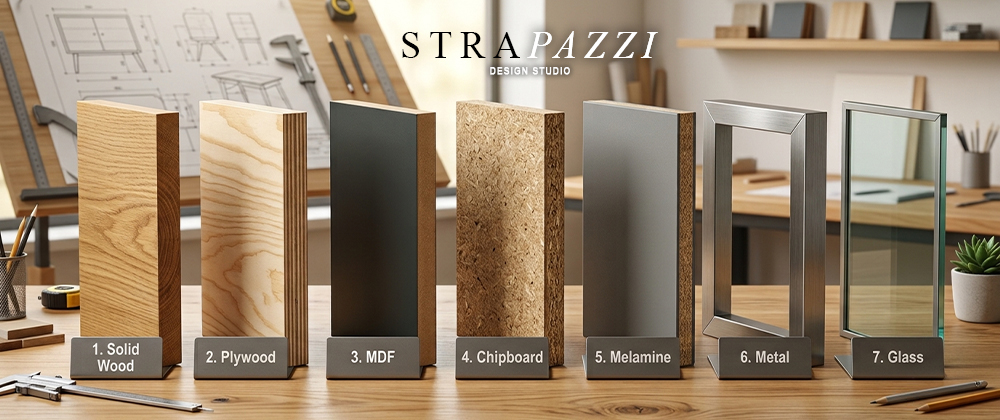
| Material | Typical use | Main characteristic |
|---|---|---|
| Solid wood | Doors, frames, bases | Strength and natural looks, high cost |
| Plywood / multi-ply | Carcasses, back panels | Excellent structural stability |
| MDF | Doors and lacquered components | Smooth finish, ideal for painting |
| Chipboard / melamine-faced | Interior structures, mass-produced kitchens | Economical, lightweight, durable if well edged |
| Metal and glass | Hardware, inserts, shelves | Mechanical precision or decorative value |
Prof. Vincenzo Pazzi
Solid
Wood
Strength and natural beauty
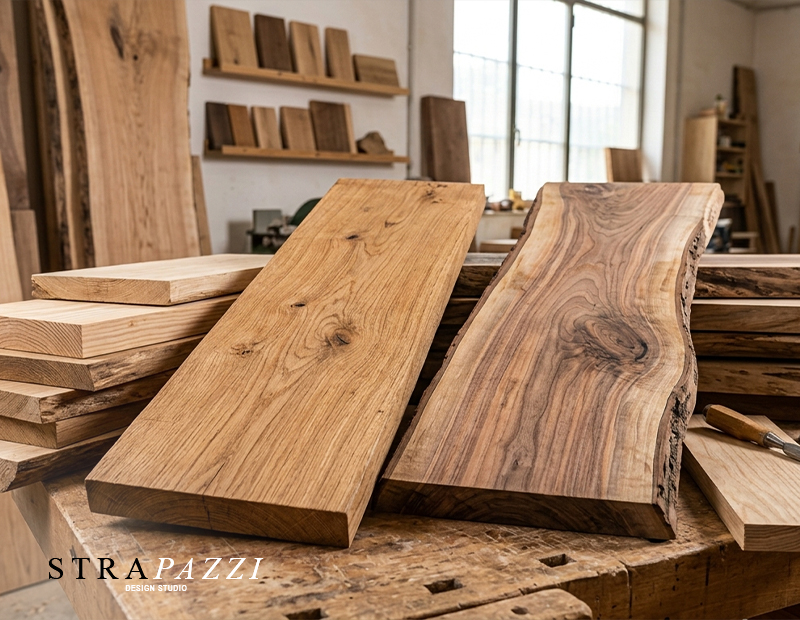
Cut directly from the trunk, with no glued layers, solid wood is the most prized material for doors, frames and bases. Its continuous grain gives it superior mechanical strength and a look no artificial material fully replicates — the figure, the warmth to the touch, the way it ages well over time.
Prof. Vincenzo Pazzi
Engineered
Panels
The most widely used method in contemporary furniture
Engineered wood dominates the production of modern furniture: it costs less than solid wood, offers greater dimensional stability, and lends itself to large-scale industrial processing. The three main variants differ in composition and intended use.
Plywood / Multi-Ply
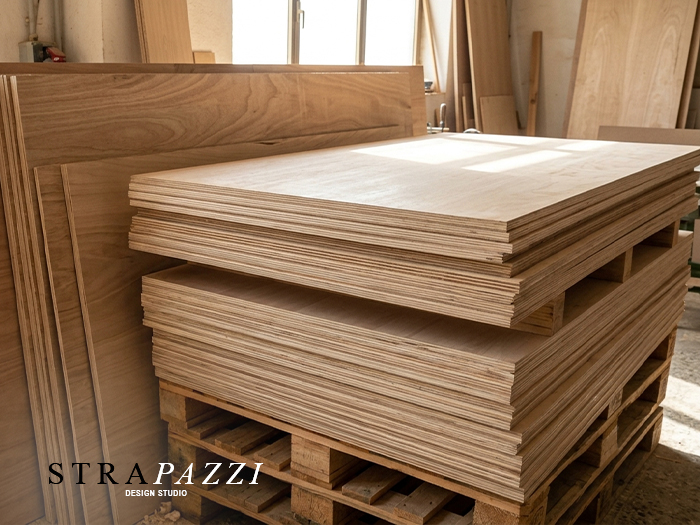
Thin sheets of wood glued with the grain running crosswise. Excellent structural stability and bending resistance: the most solid choice for carcasses and back panels.
MDF
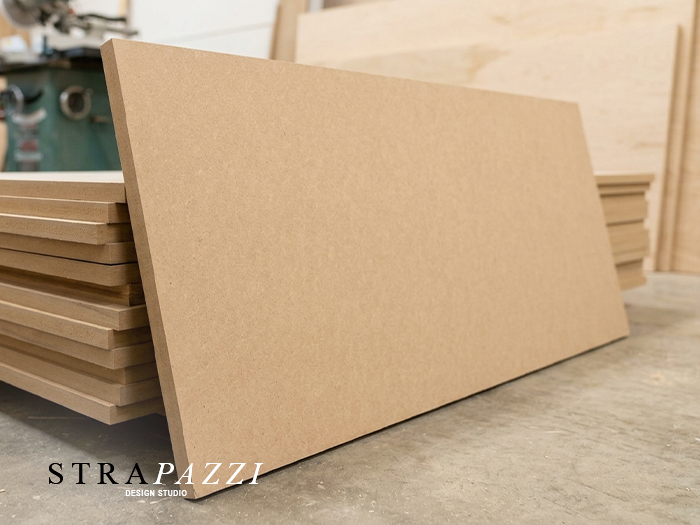
Wood fibres pressed and bonded with resin, giving a smooth, uniform surface. Ideal for doors and components that need a high-quality lacquered or painted finish.
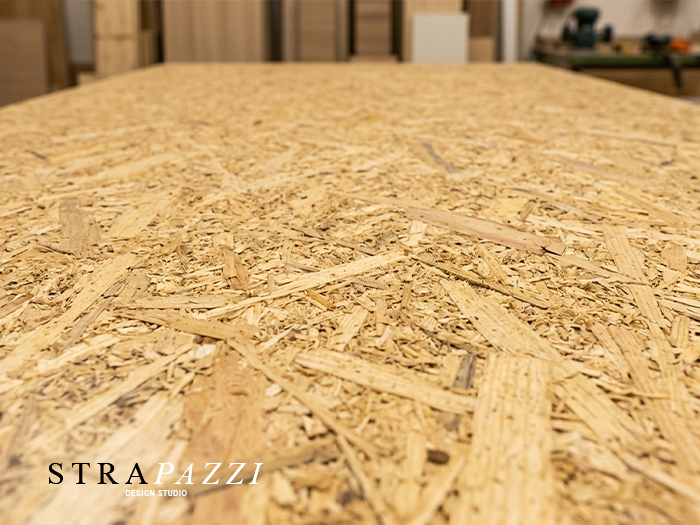
Chipboard (Melamine-Faced)
Wood chips pressed and covered with a melamine film. Very common in interior structures and modern kitchens: economical, lightweight, durable if the edges are well finished.
Prof. Vincenzo Pazzi
Metal
& Glass
Mechanical precision and decorative value
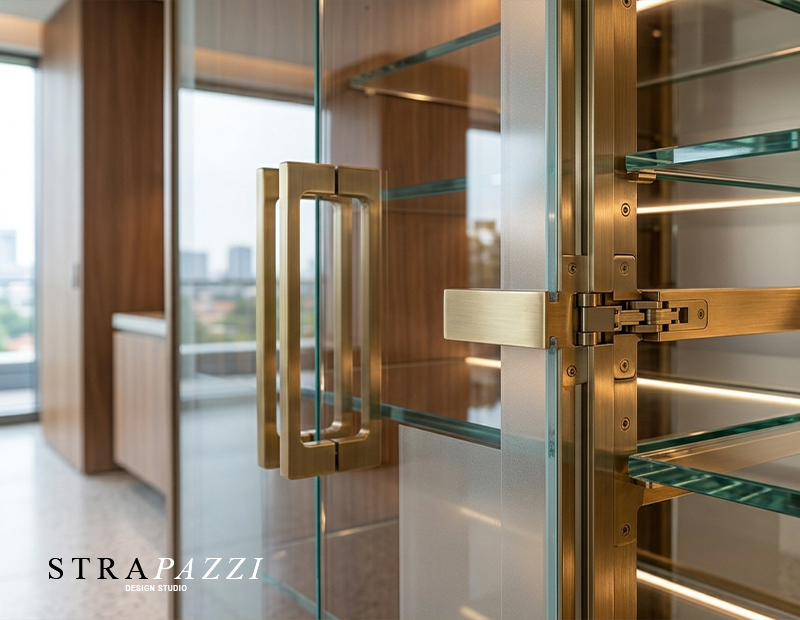
Metal and glass don't build the carcass of a cabinet, but they're essential for how it works and for its finer finishes. Metal is the material of choice for all hardware — handles, hinges, runners — wherever mechanical precision and wear resistance are needed. Glass is used as a decorative insert in doors or as a shelf, whenever the goal is to visually lighten the volume of a piece.
Prof. Vincenzo Pazzi